Ceramics
Available for Sale ⦿ Deeper Diving ⦿ Discovery Slideshow ⦿ Gallery of Occasional Miracles
Gaia’s Glazes: Mysteries of Melting Sea Mud Revealed
How does melting mud into glaze become a livelihood? What was repeatable — and what wasn't? How did mistakes become design parameters, and how did the early internet shape a career?
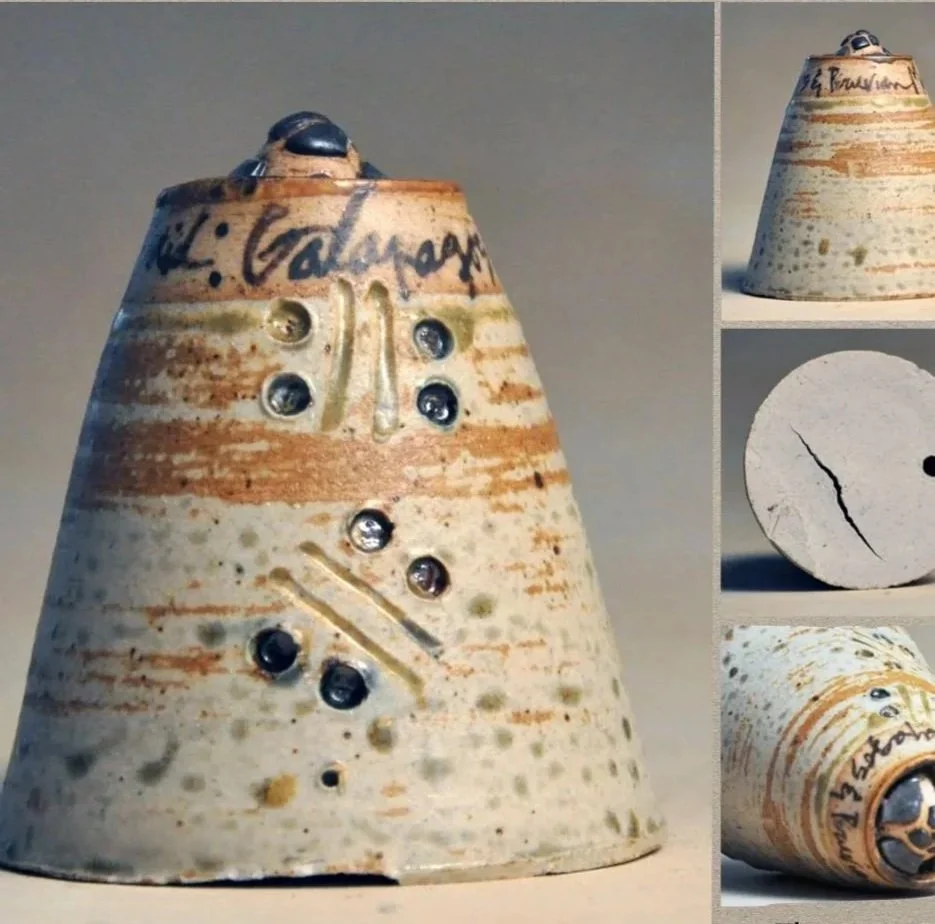
First Tests
From the seafloor to the kiln, each sediment sample arrived as an unknown. Each test was a stepping stone. Here are the results of my first experiments — what they did when heated to 2,340°F.
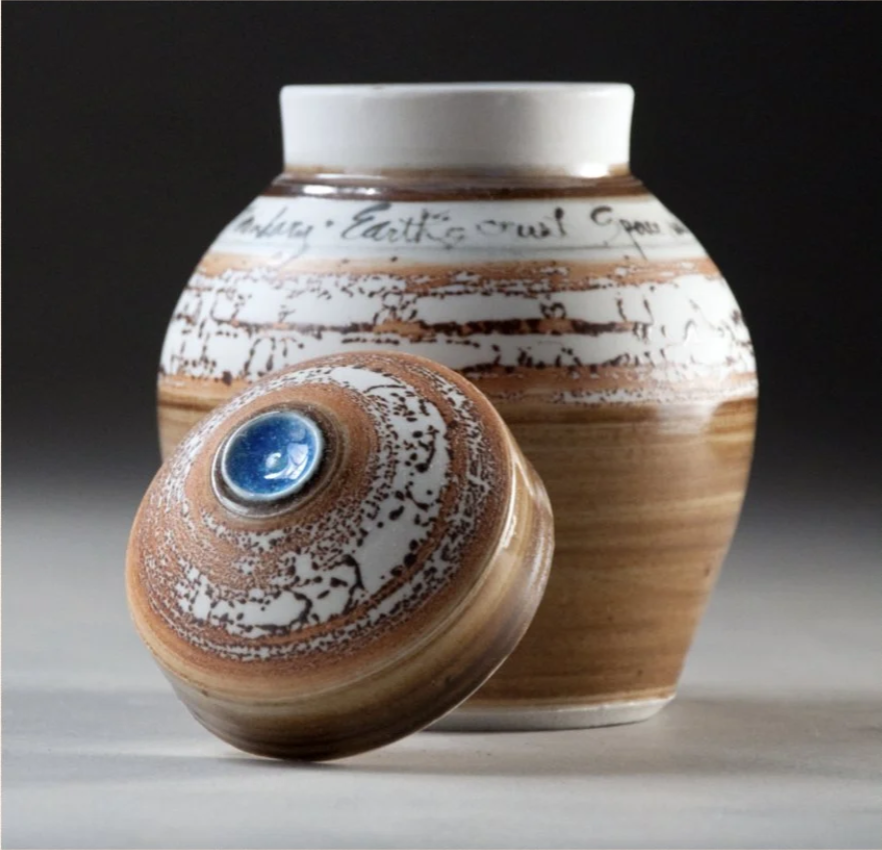
Pots & Wall Pieces for Purchase
Contact me for information about payment options and visit the studio if you can. Shipping cost and applicable taxes are not included in prices.
Deeper Diving
An archive of the work’s history, rich in images.
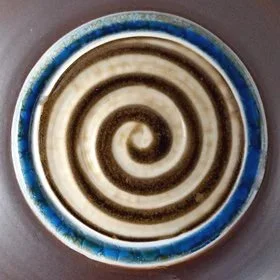
First Tests
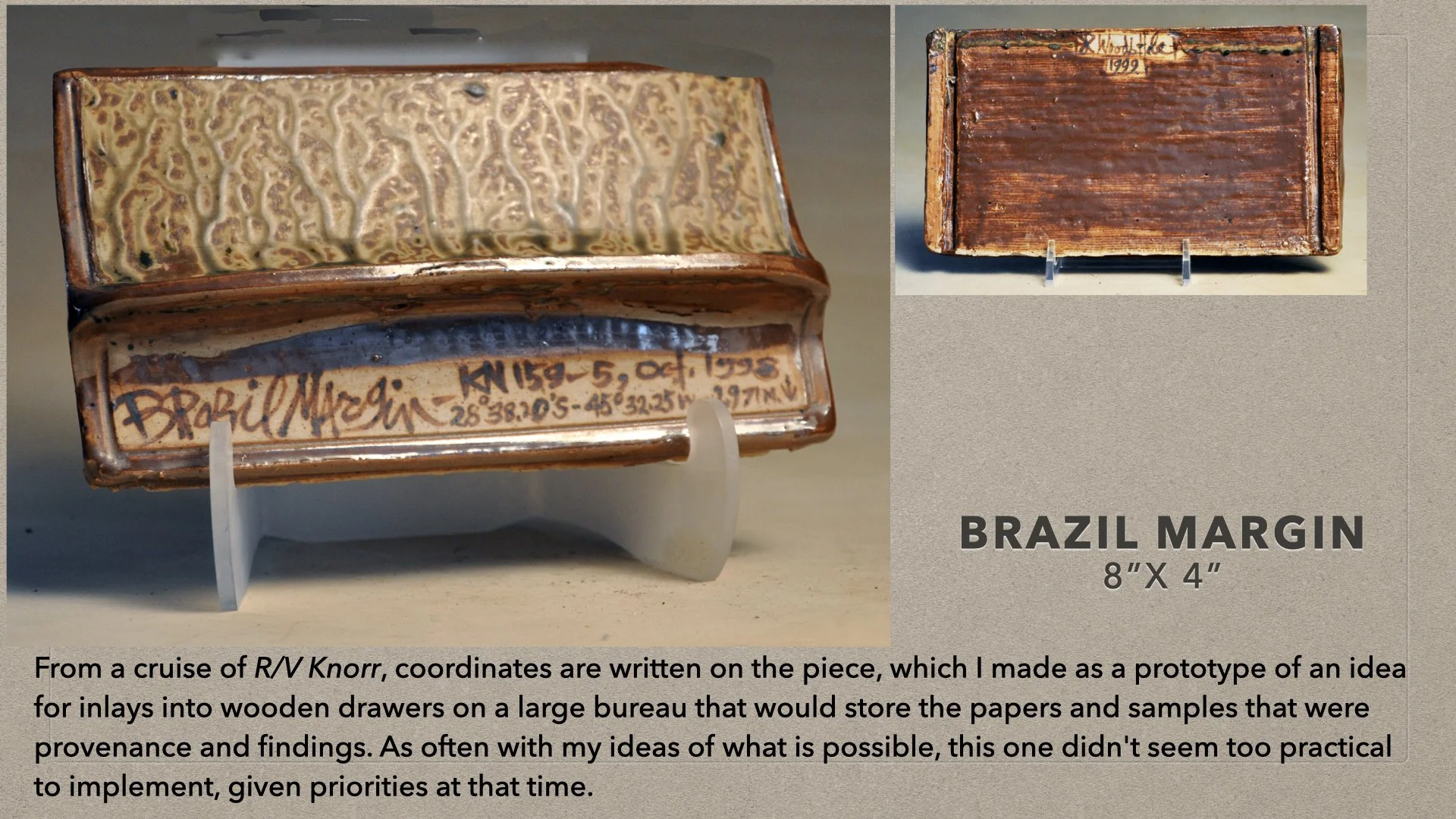
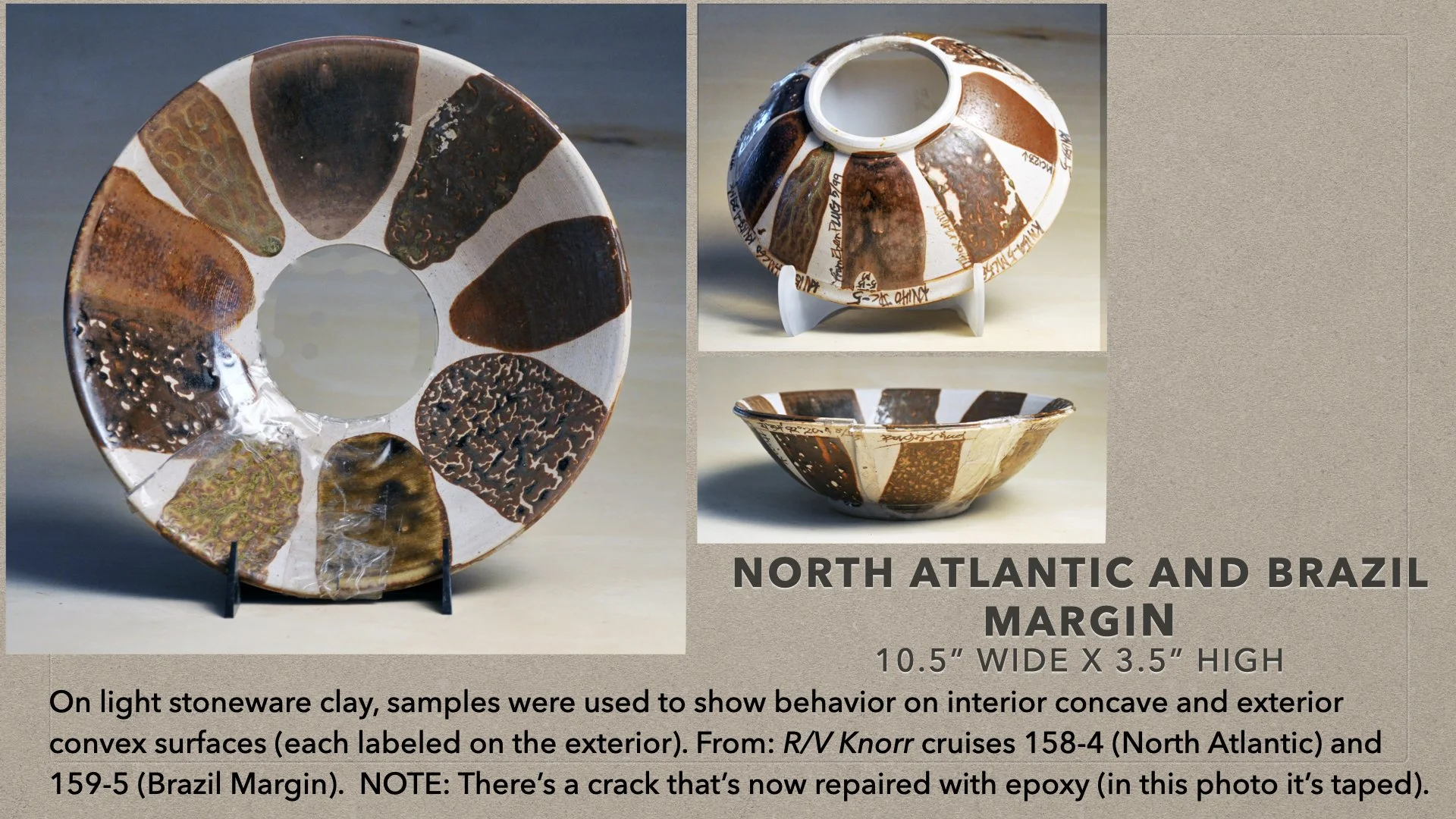
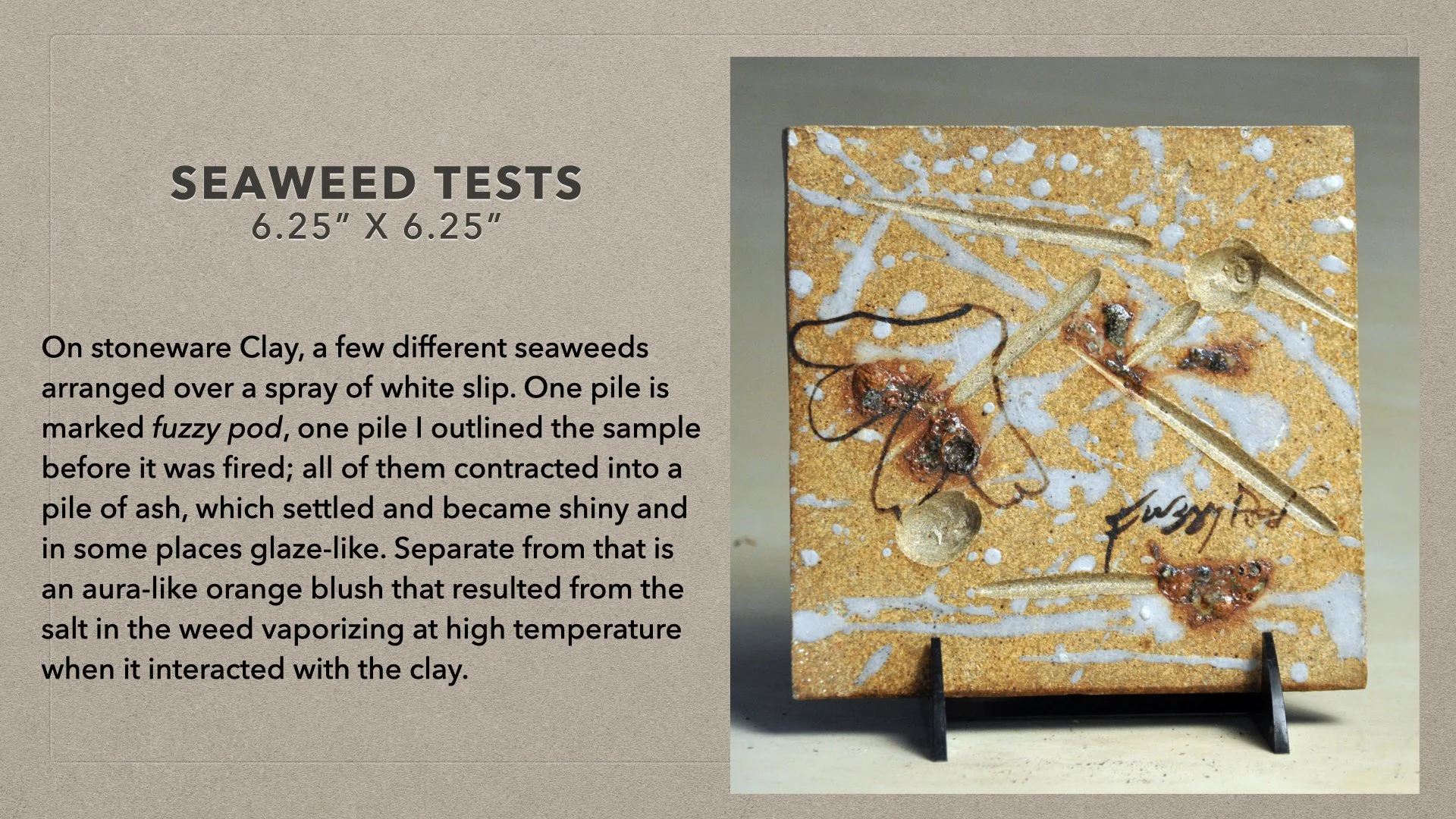
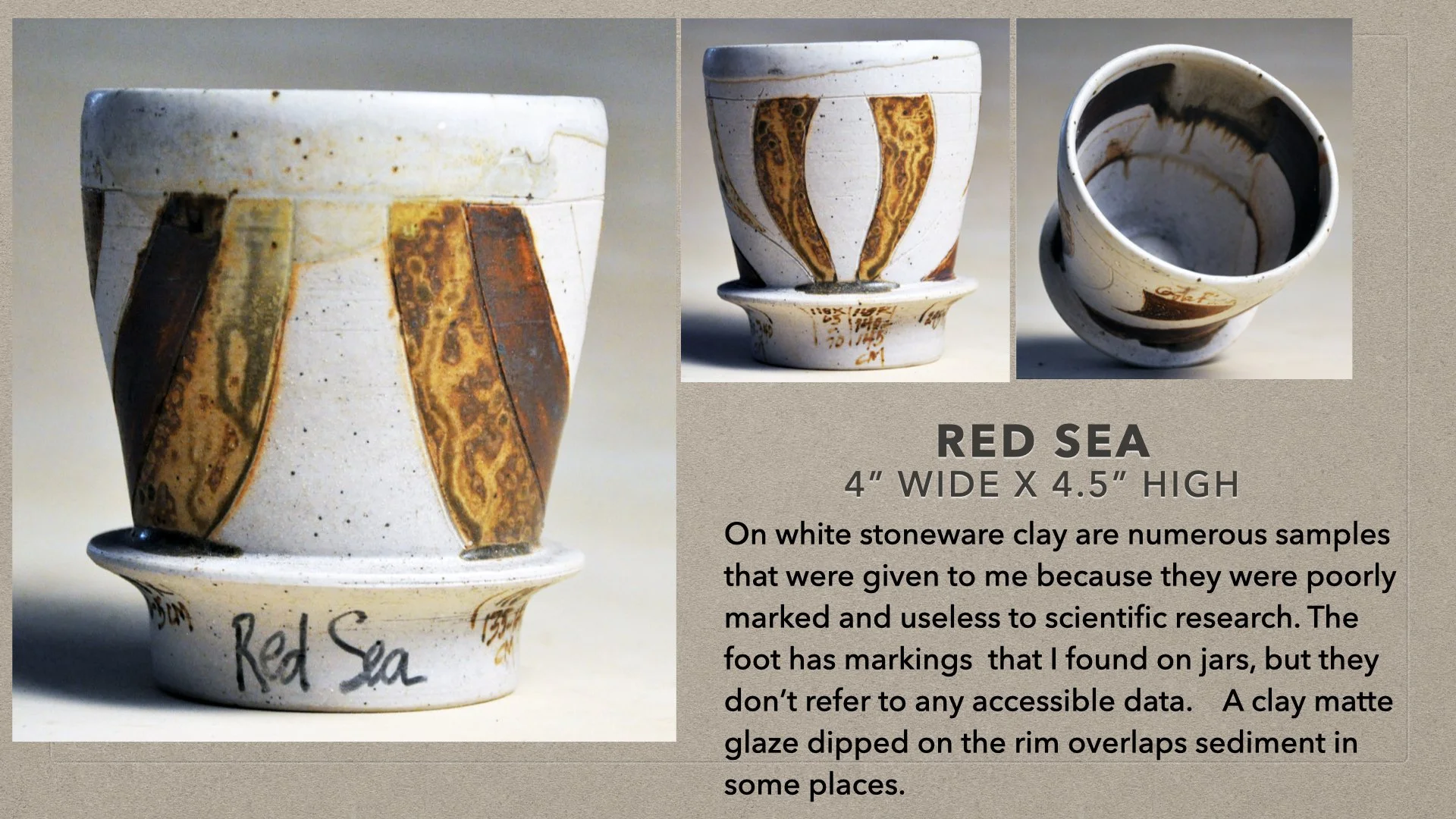
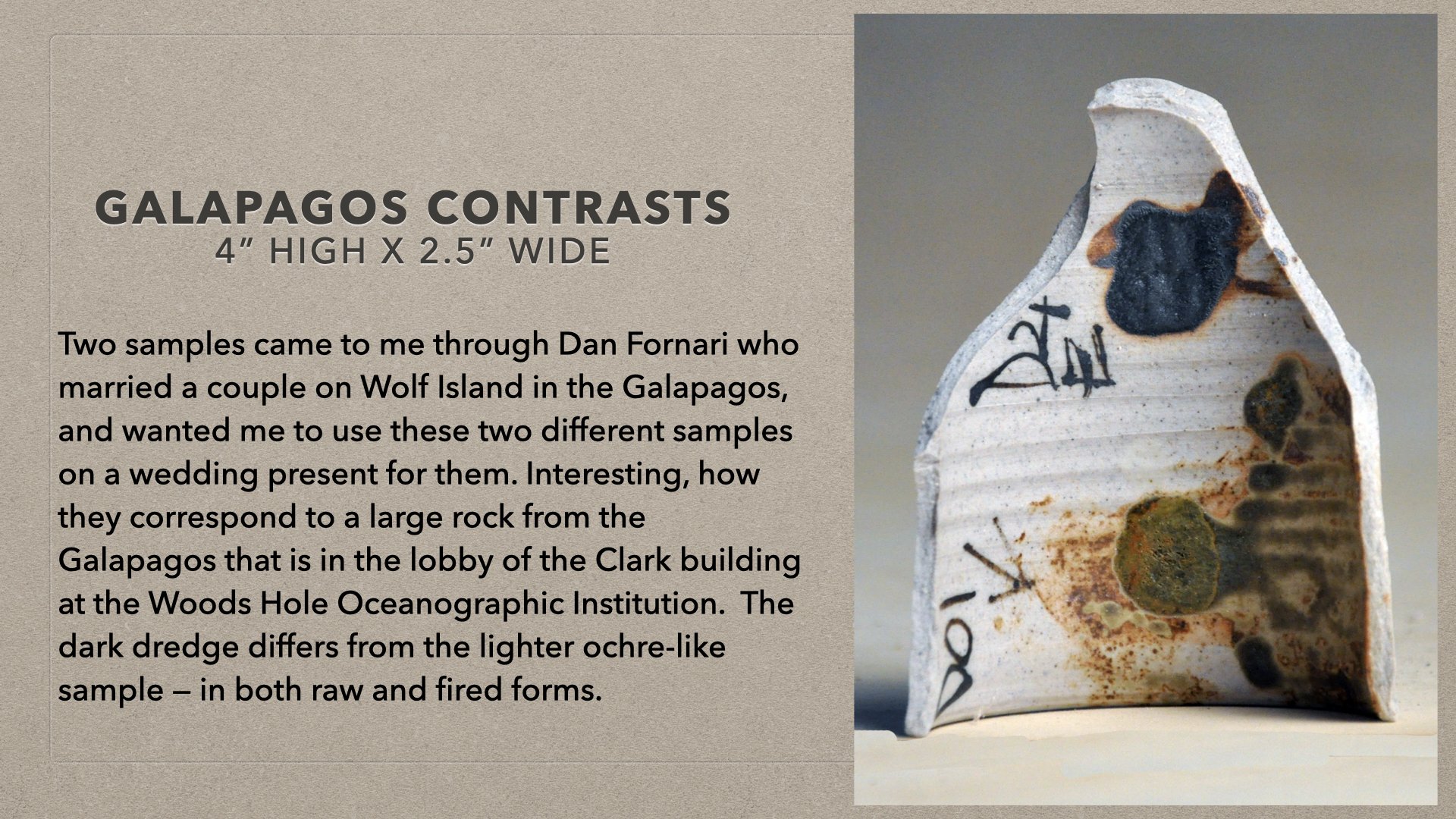
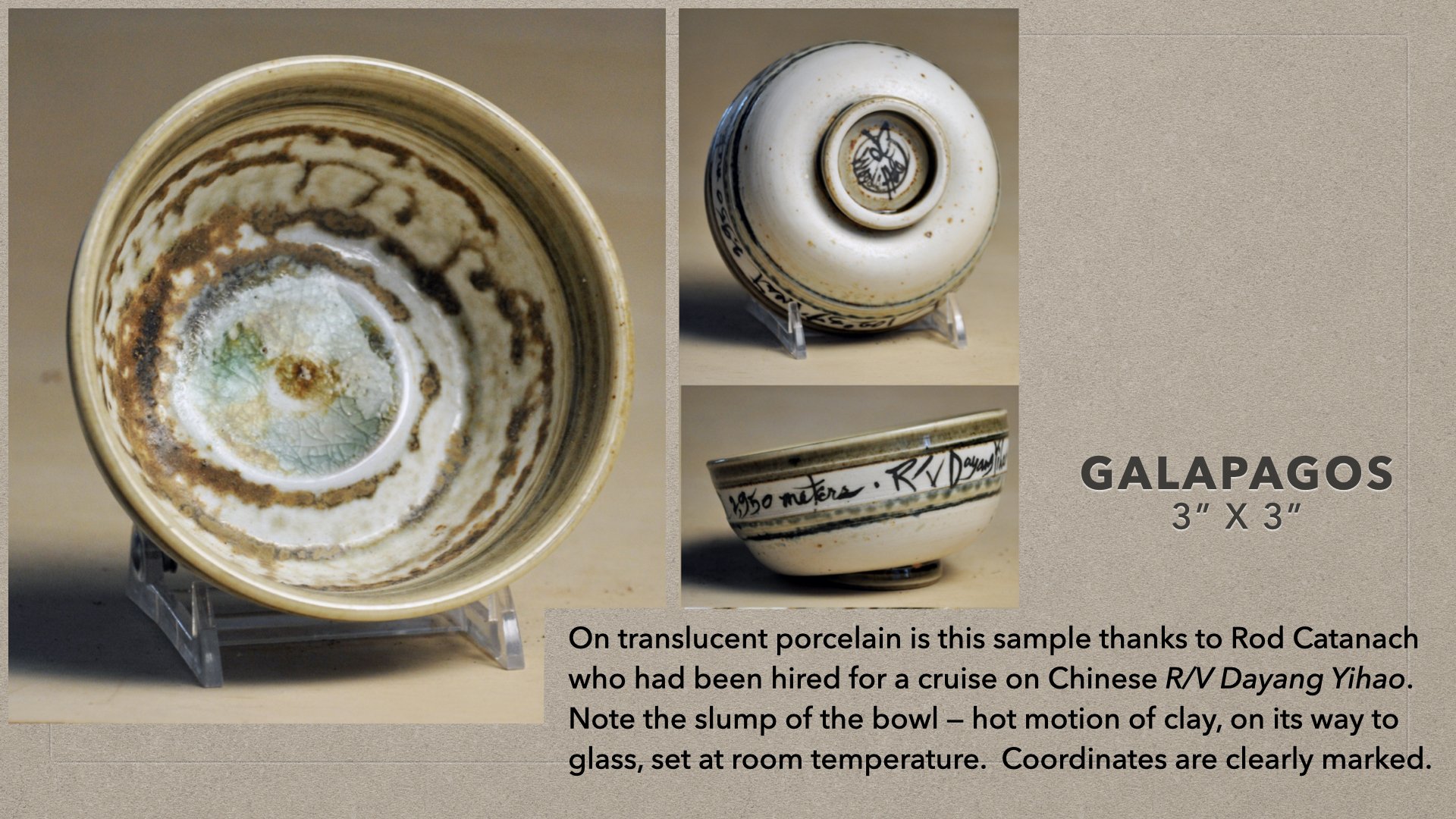
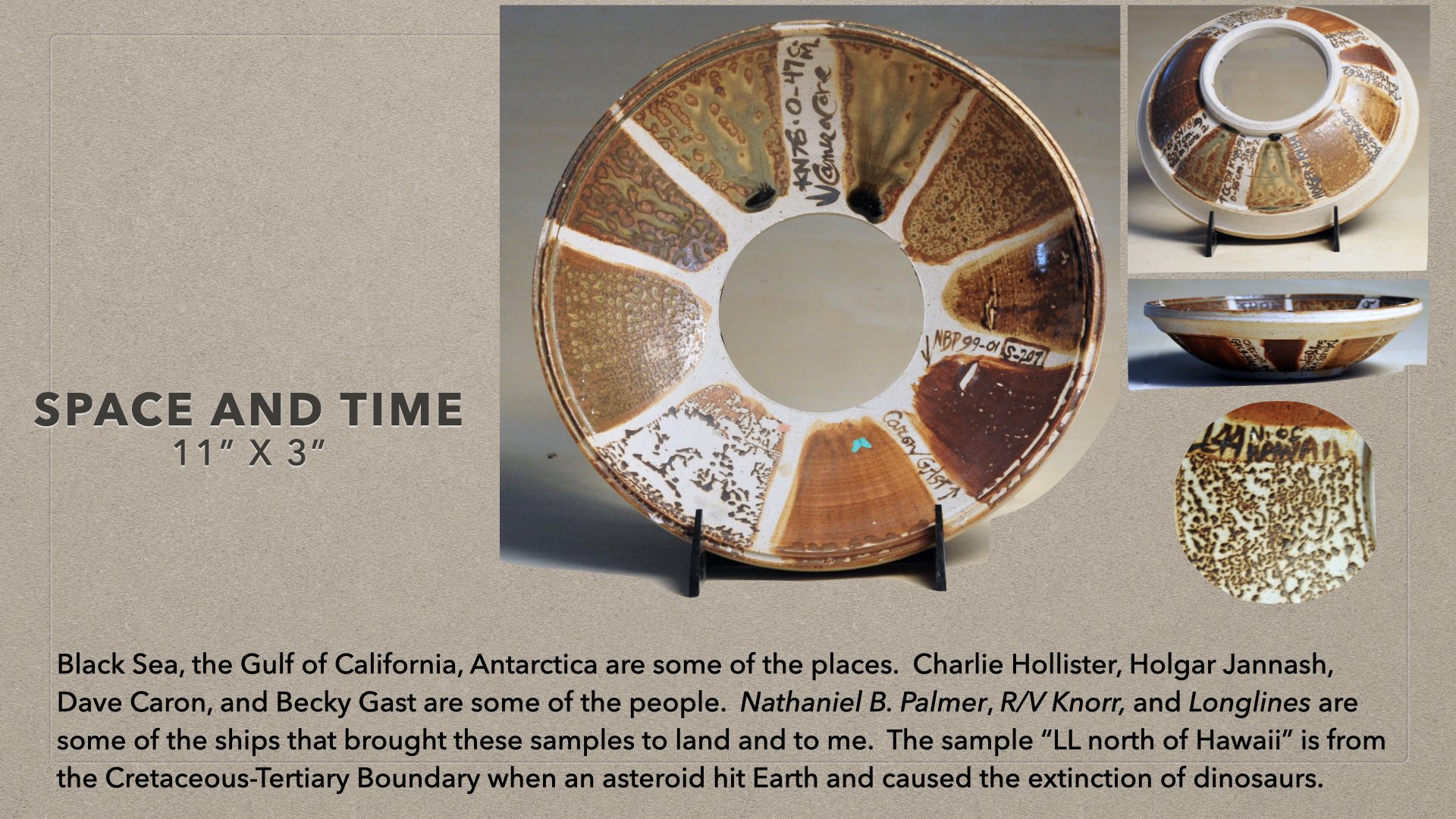
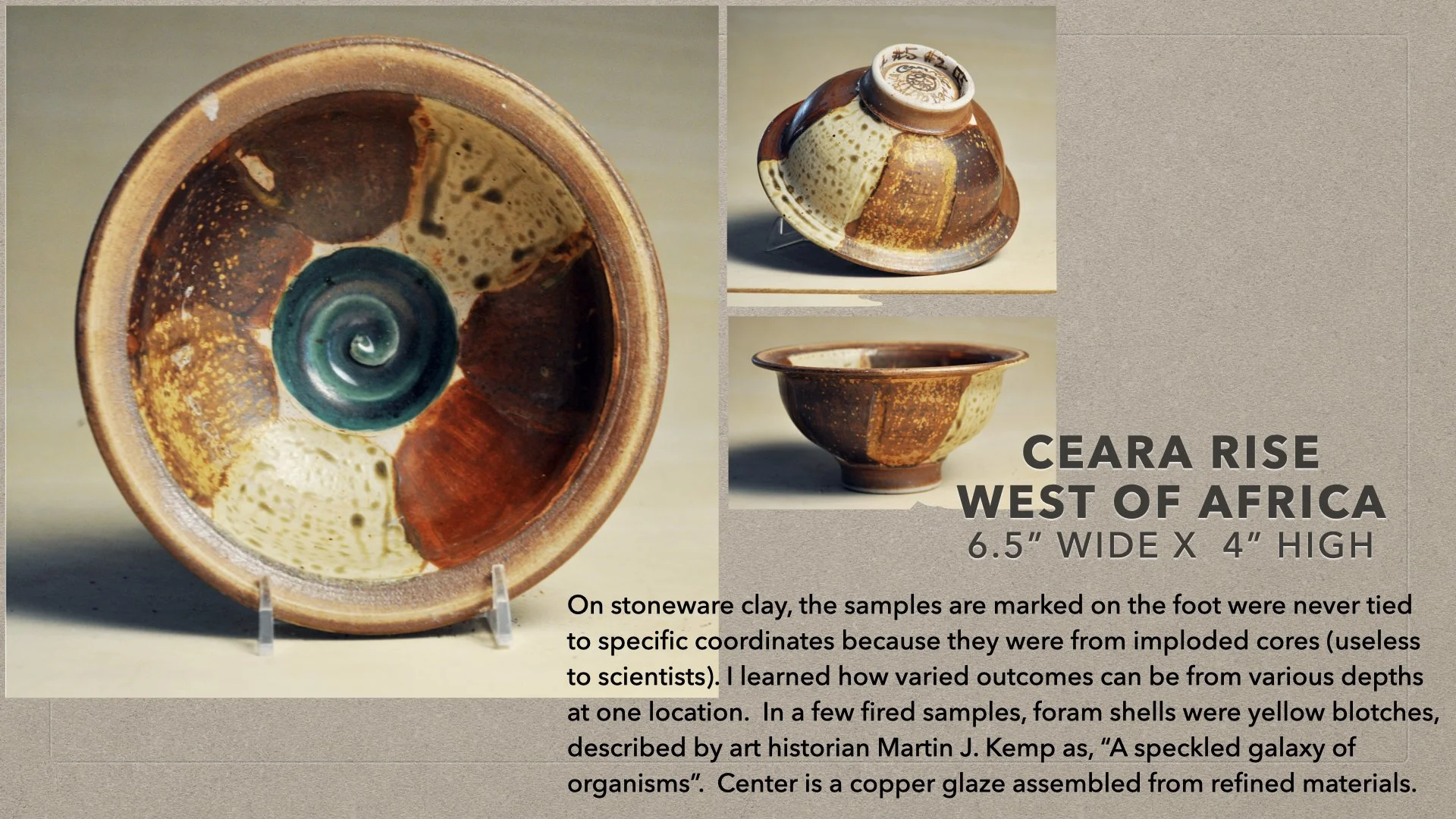
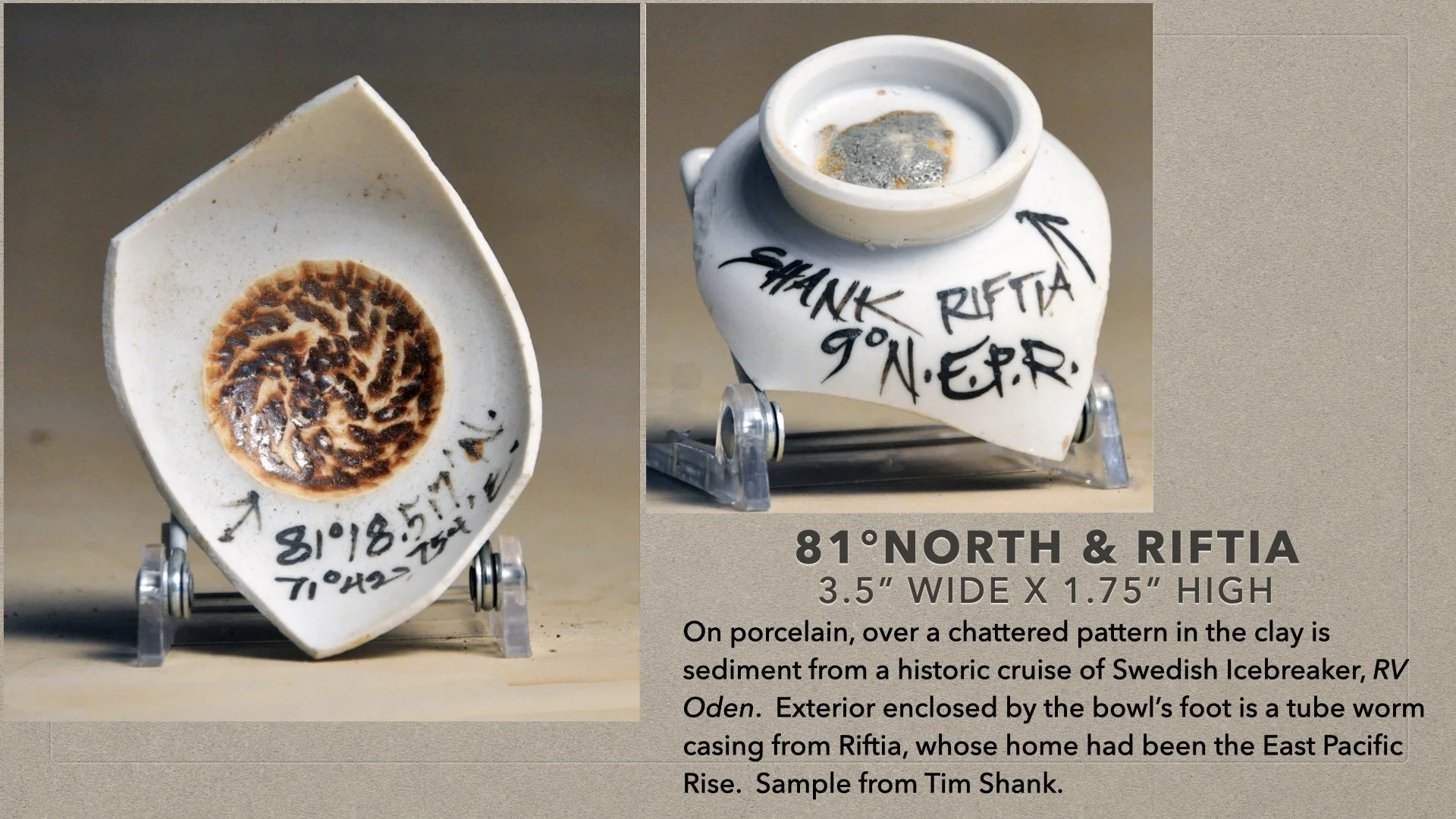
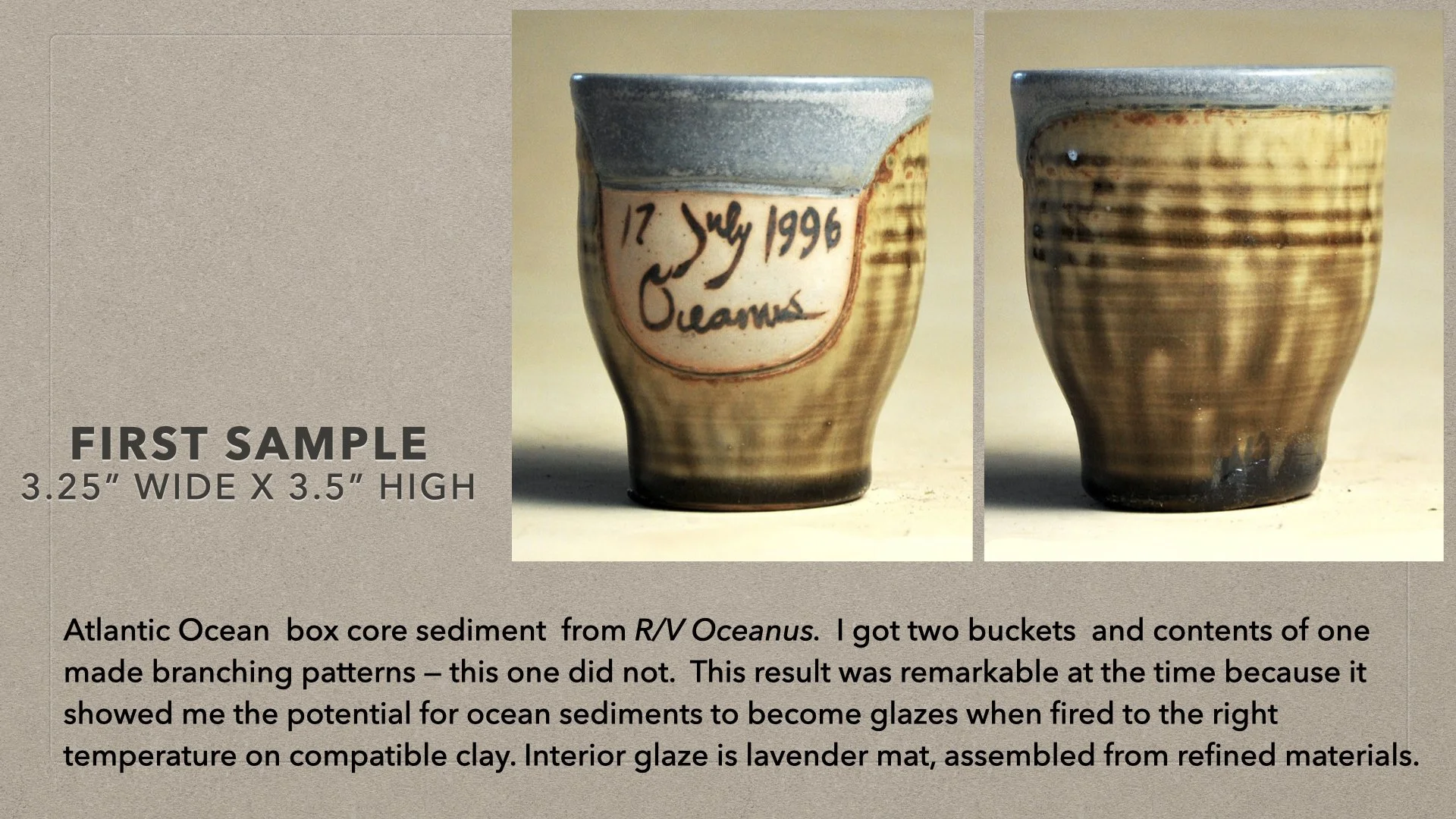
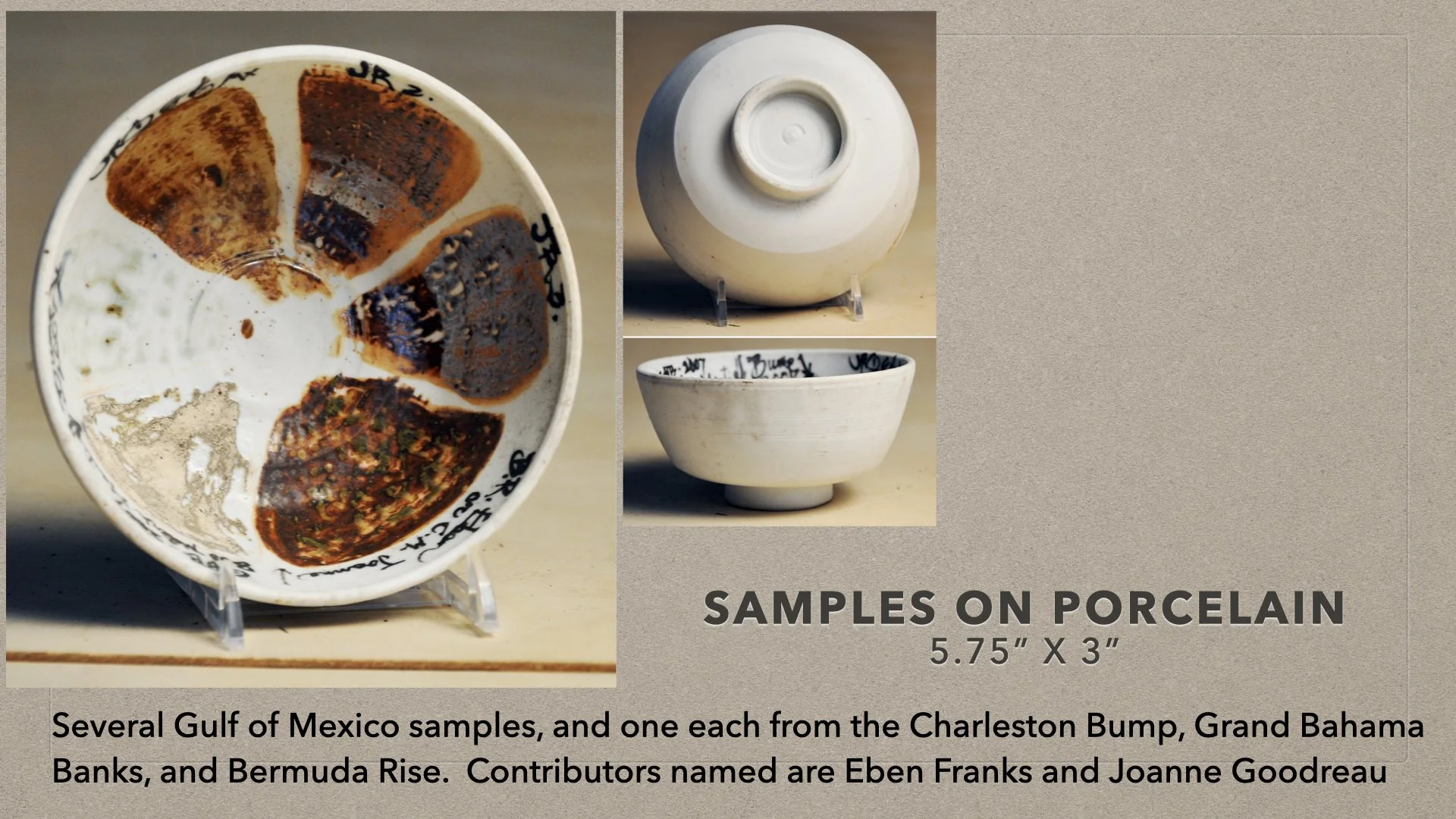
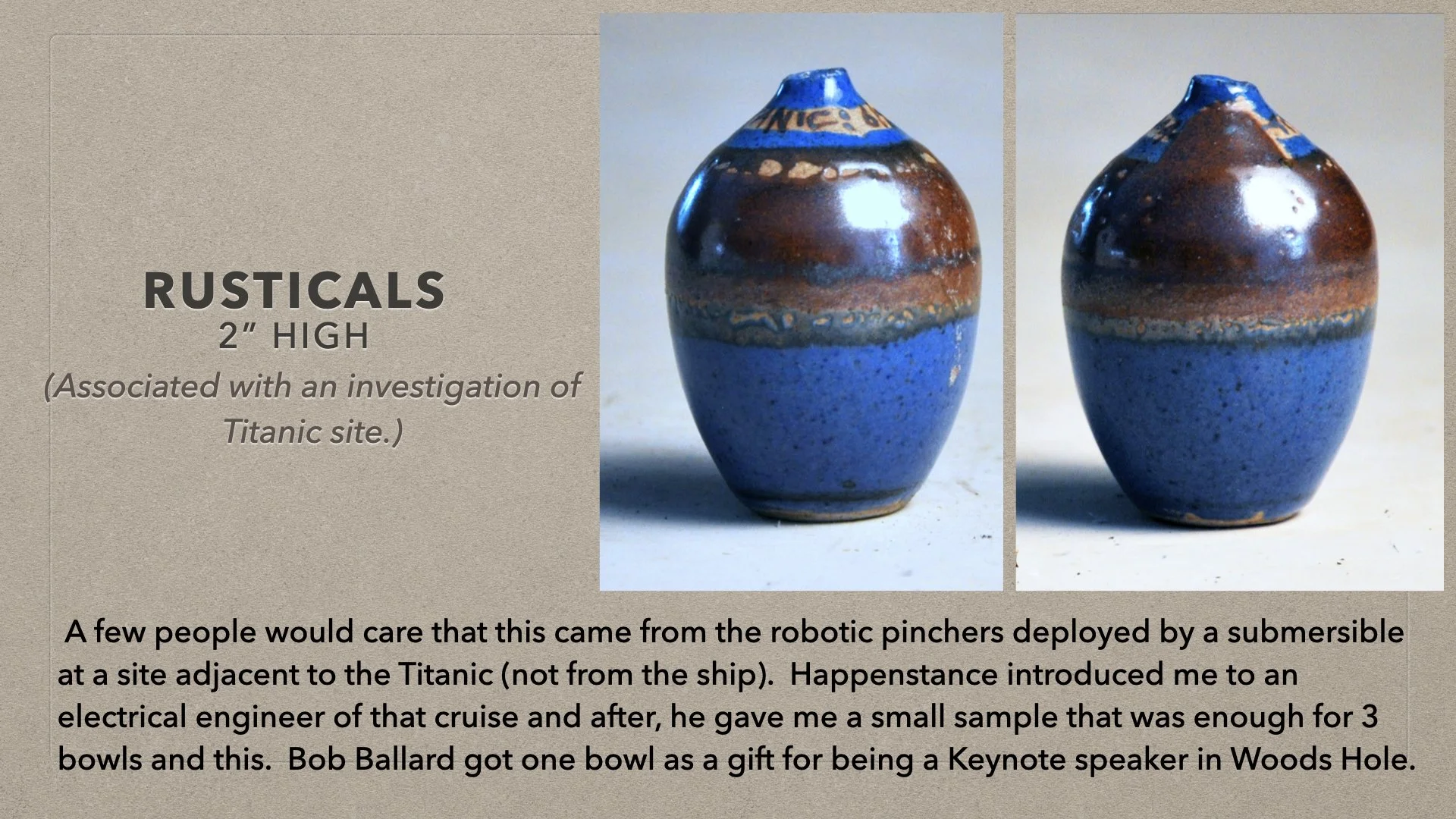
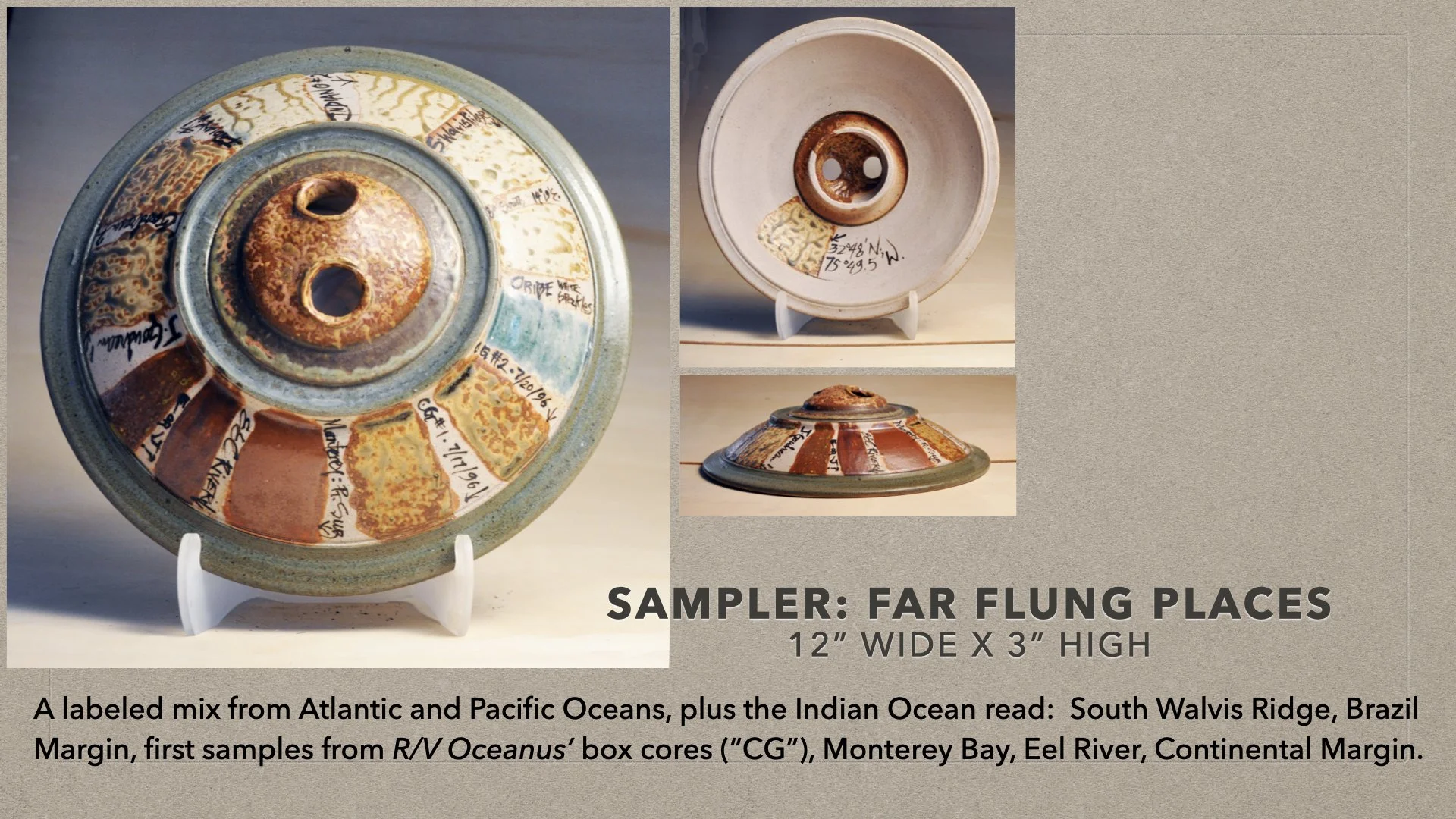
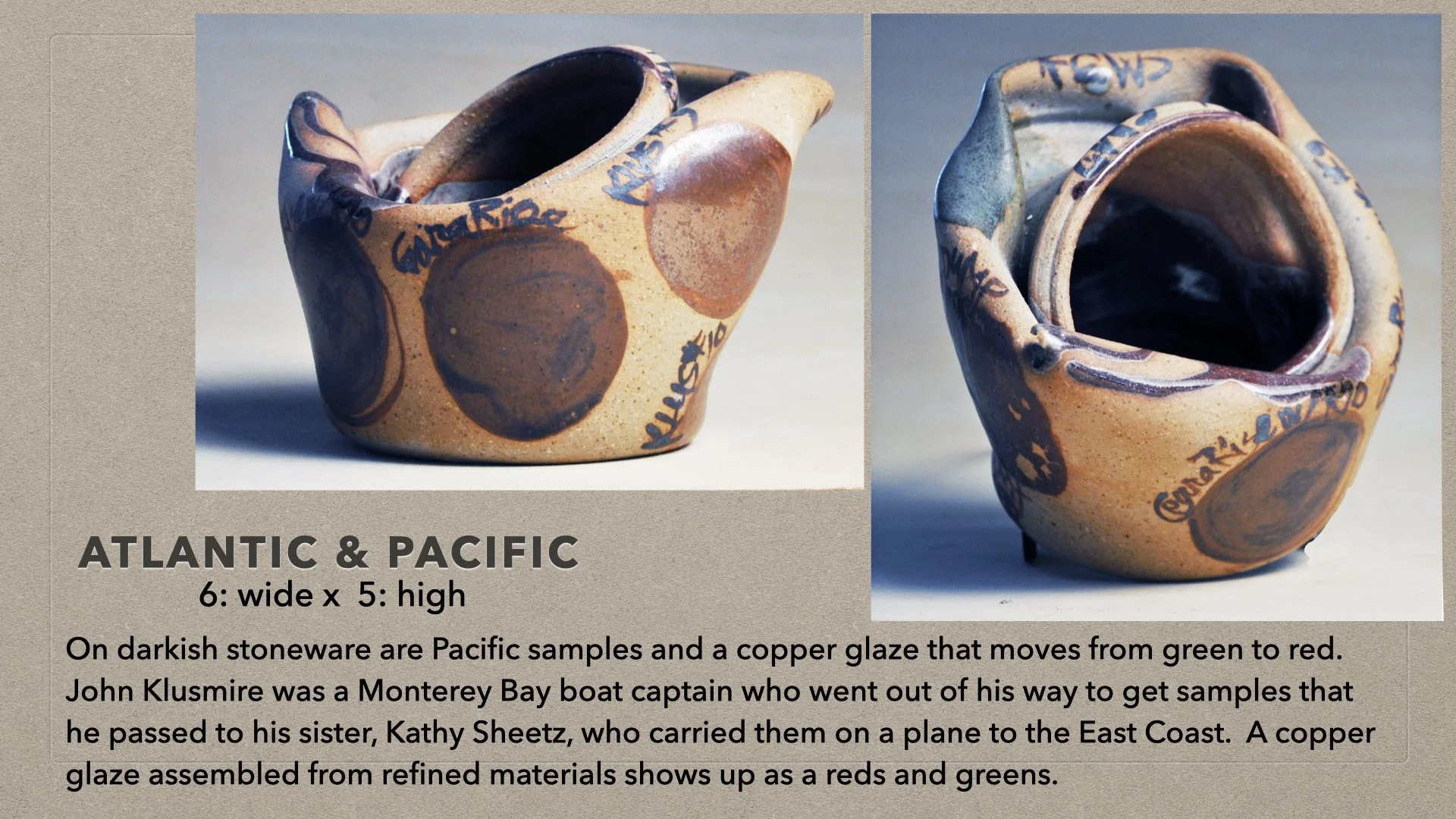
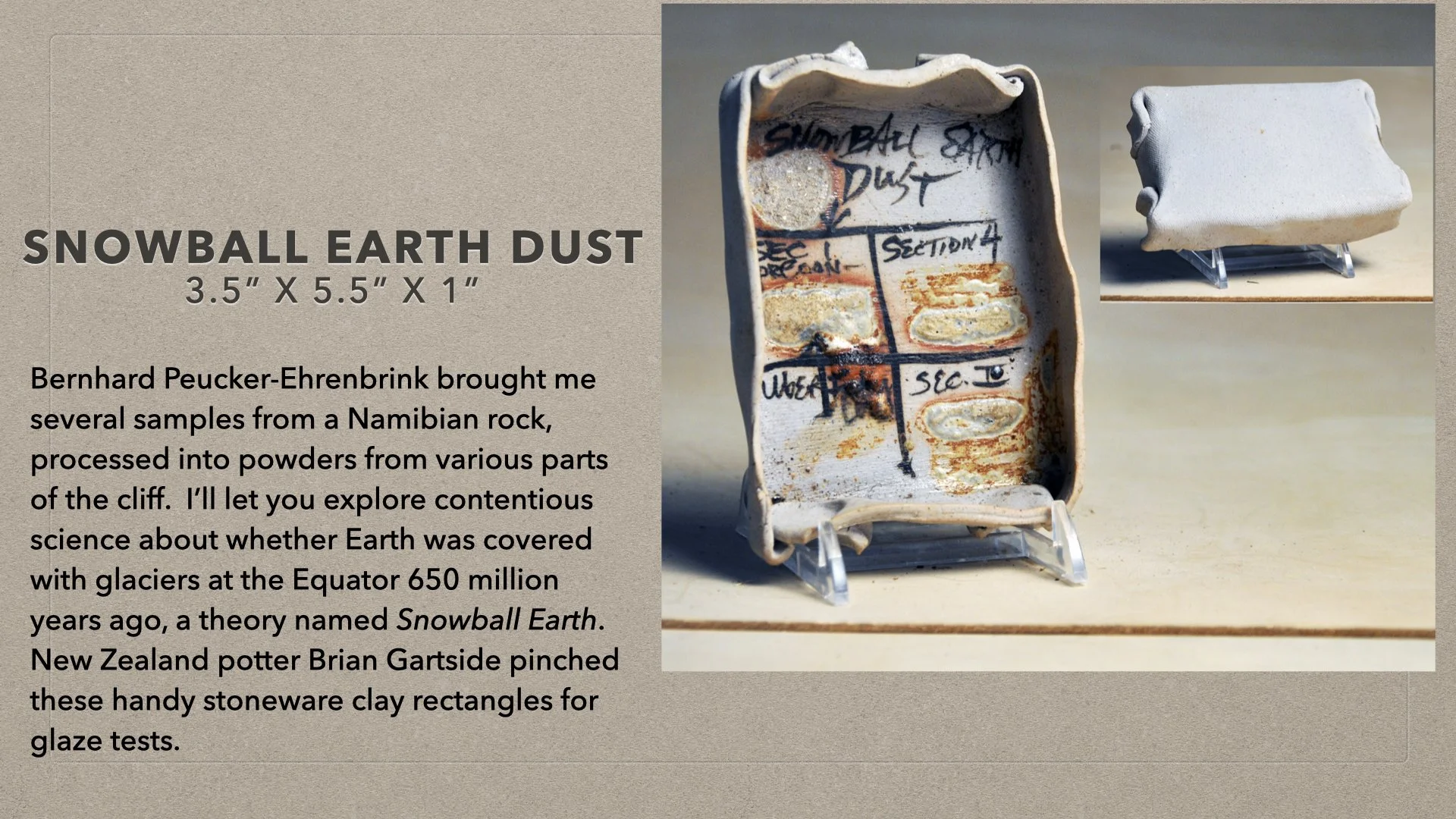
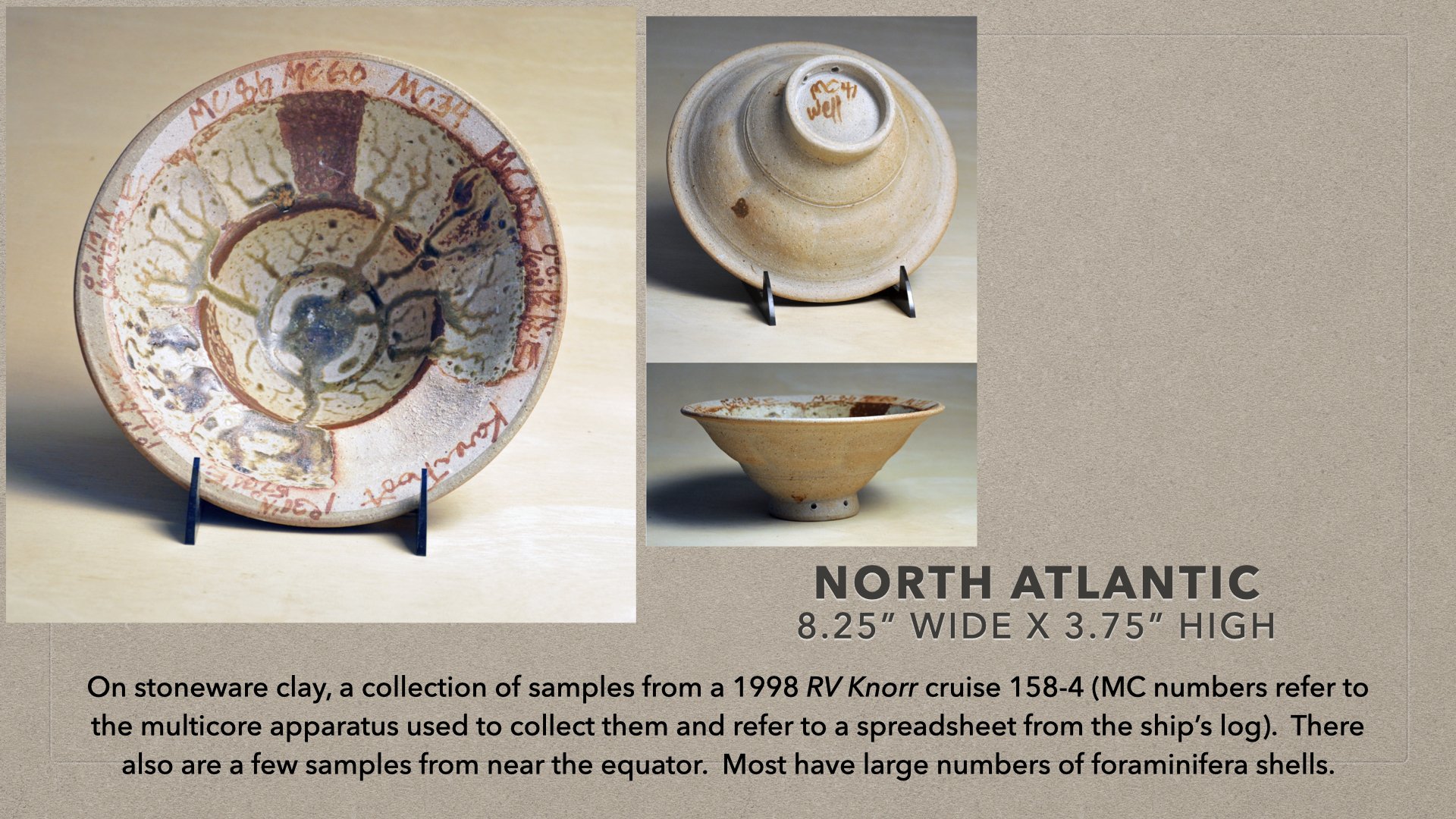
From the seafloor to the kiln: ocean sediments, rock samples, even tubeworm casings and granules from hydrothermal vents. None of them came with instructions, so I tested, on porcelain and stoneware, by trial and error. Each result was a clue for the next firing. I kept them close. A result rarely repeated but I learned to make good guesses.
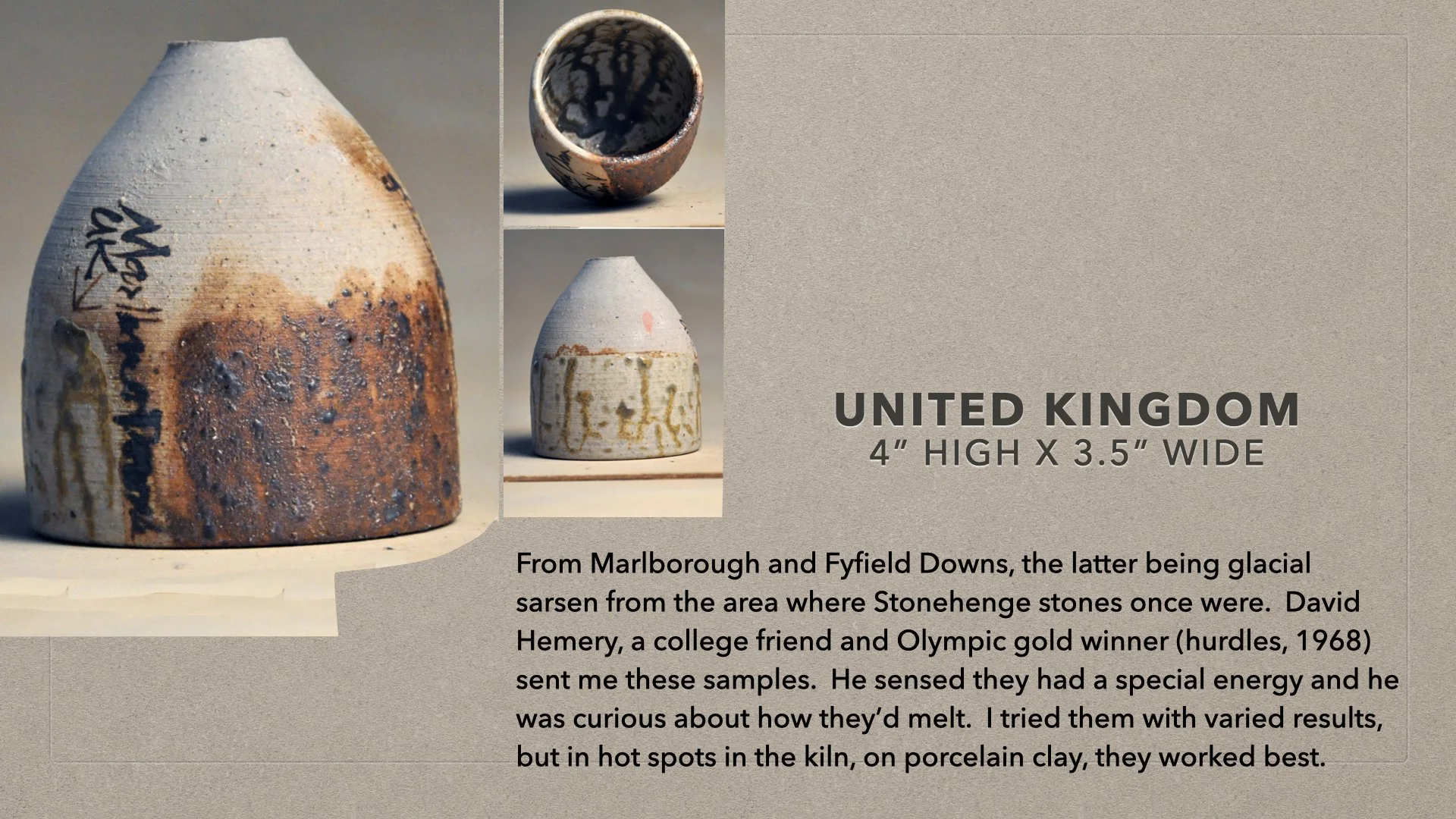
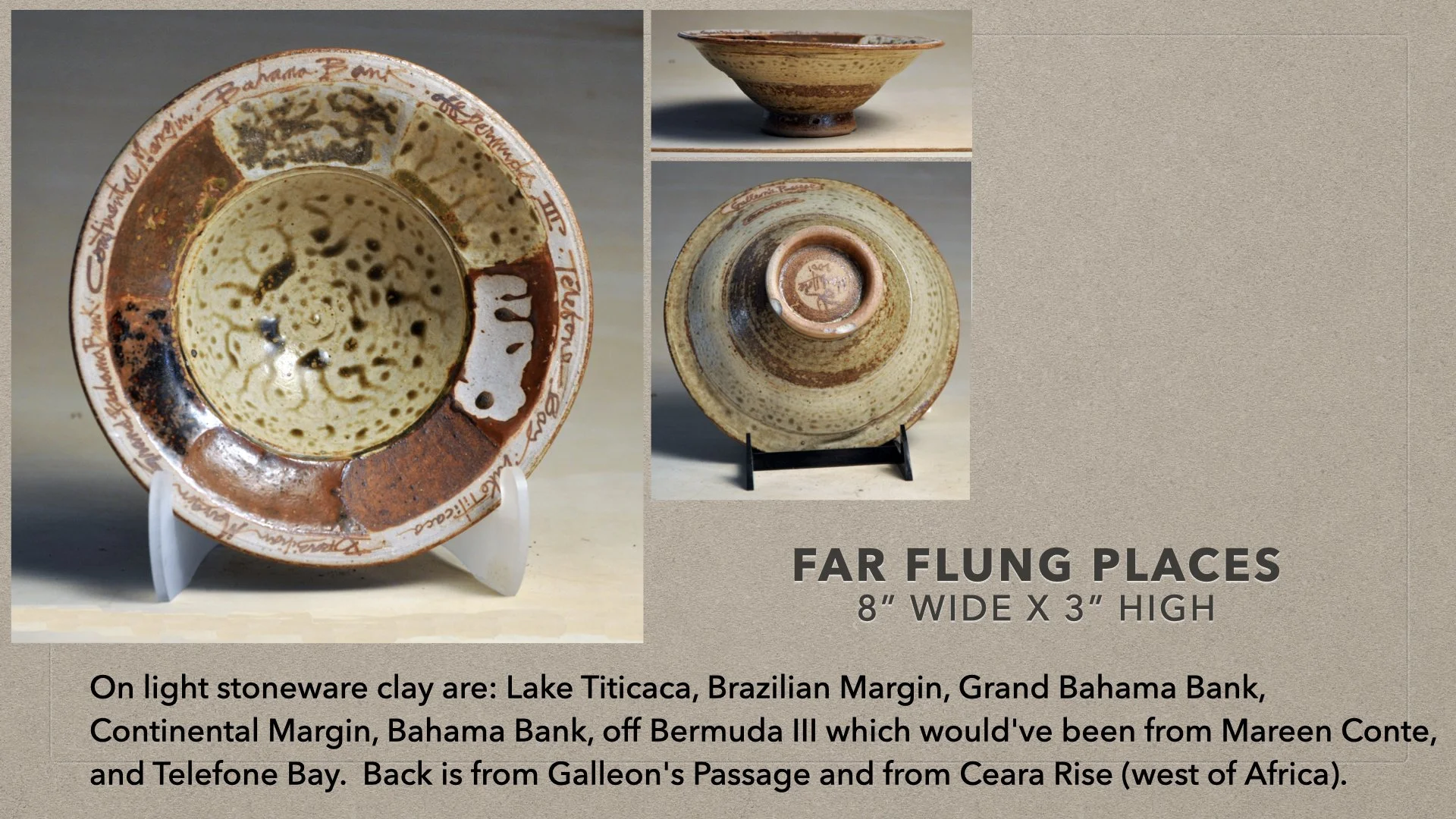
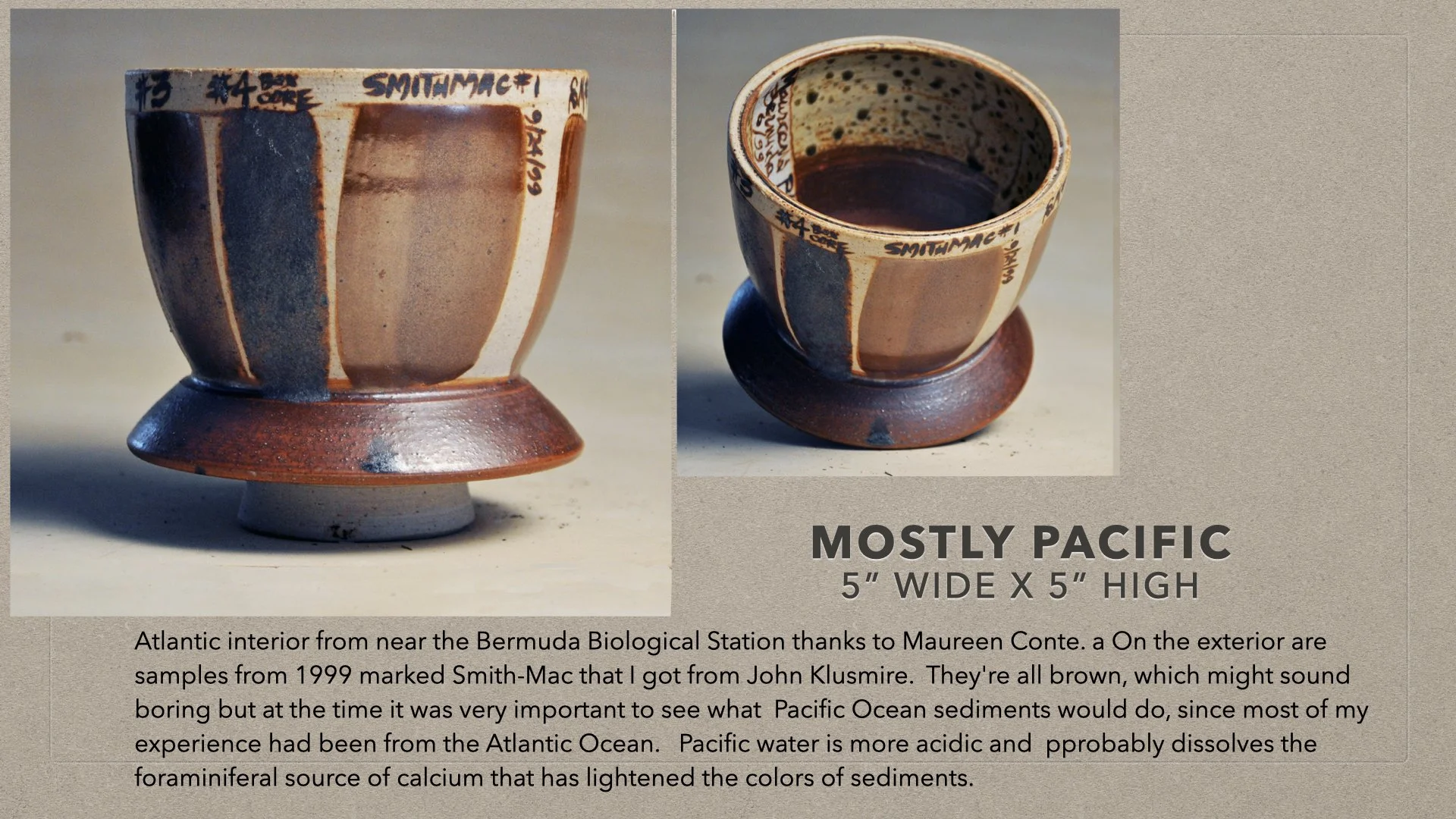
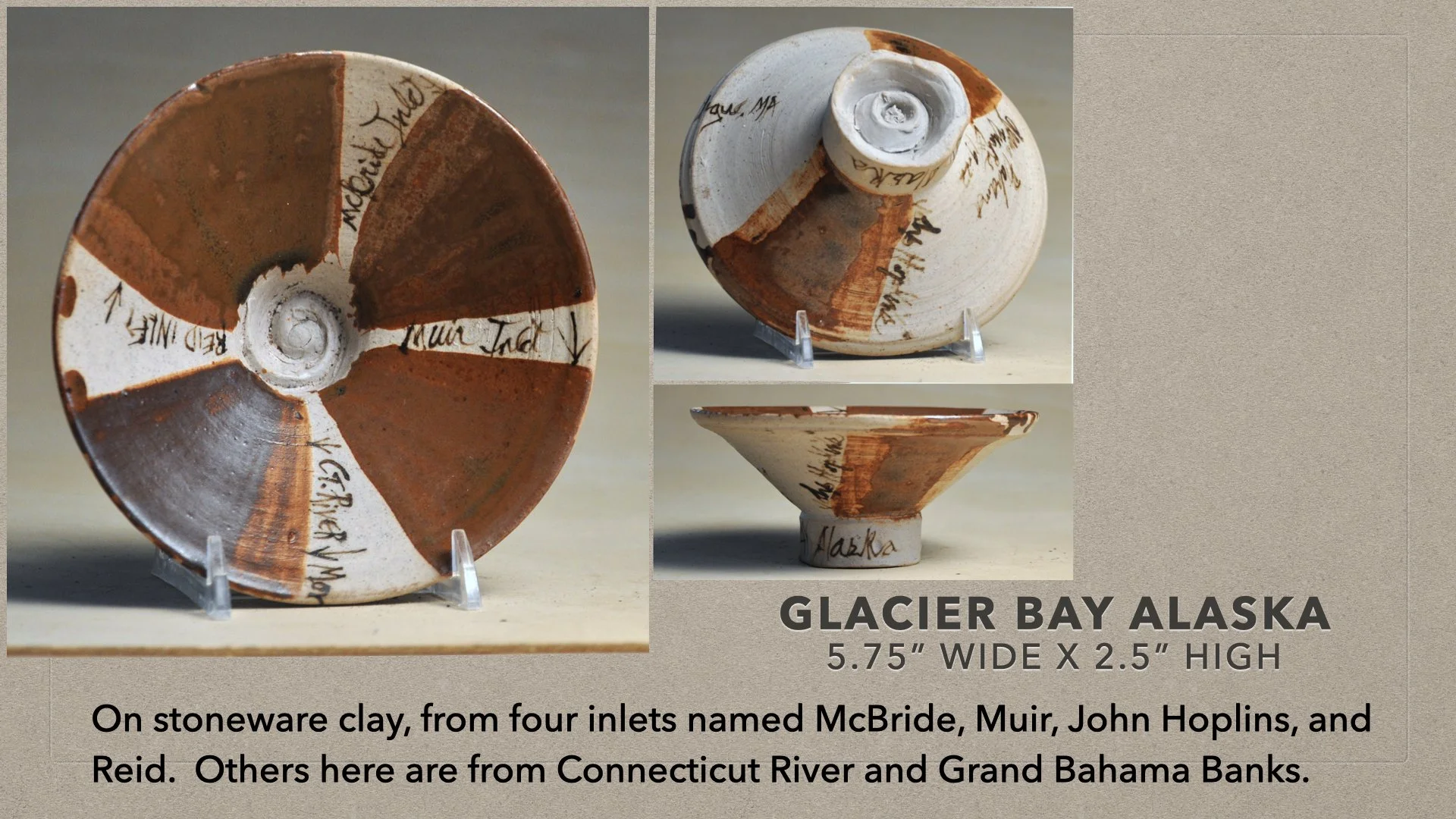
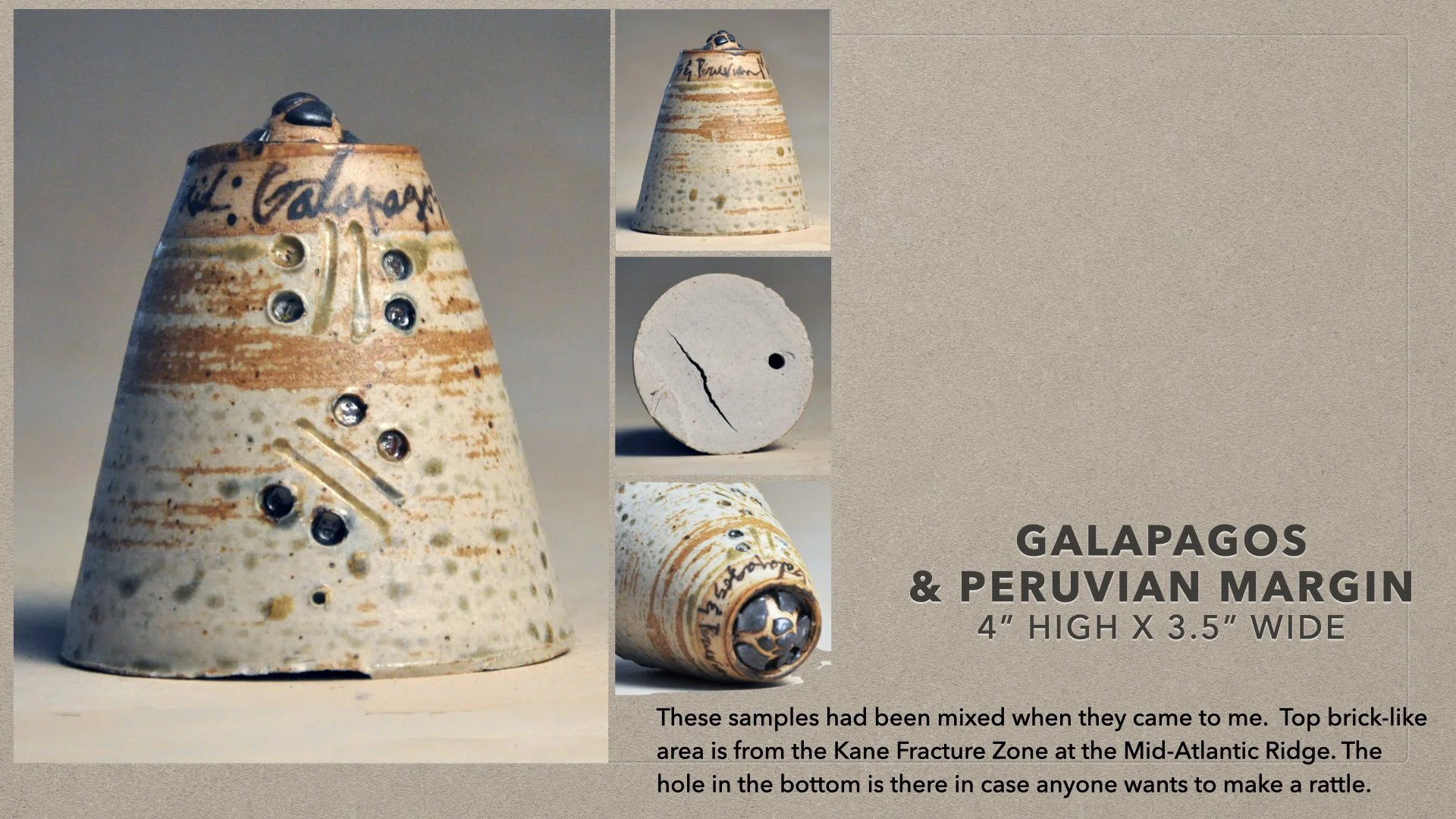
Pots & Wall Pieces for Purchase
Click on an item for larger views of details. Contact me to purchase.
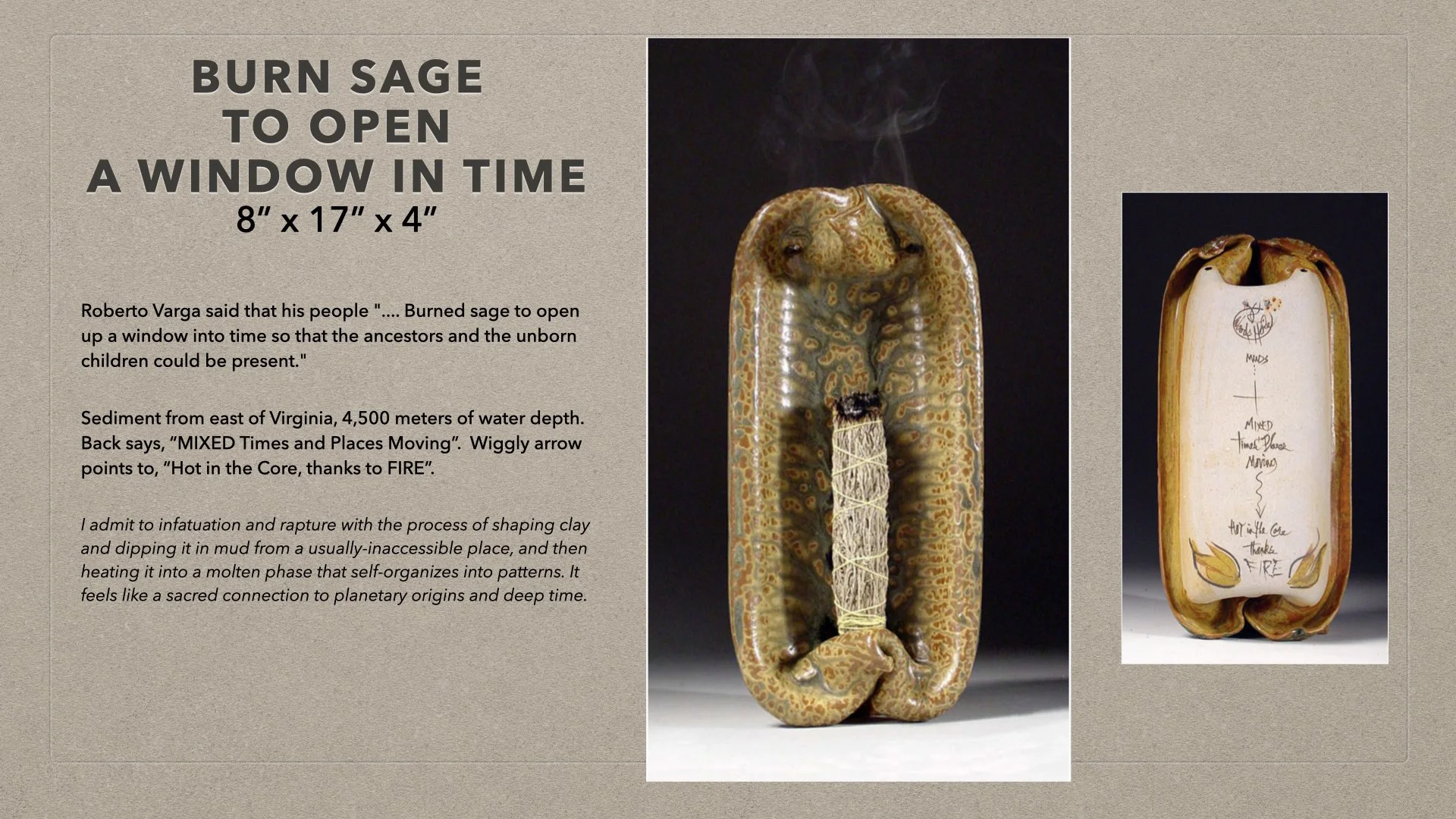
Burn Sage - $1,800
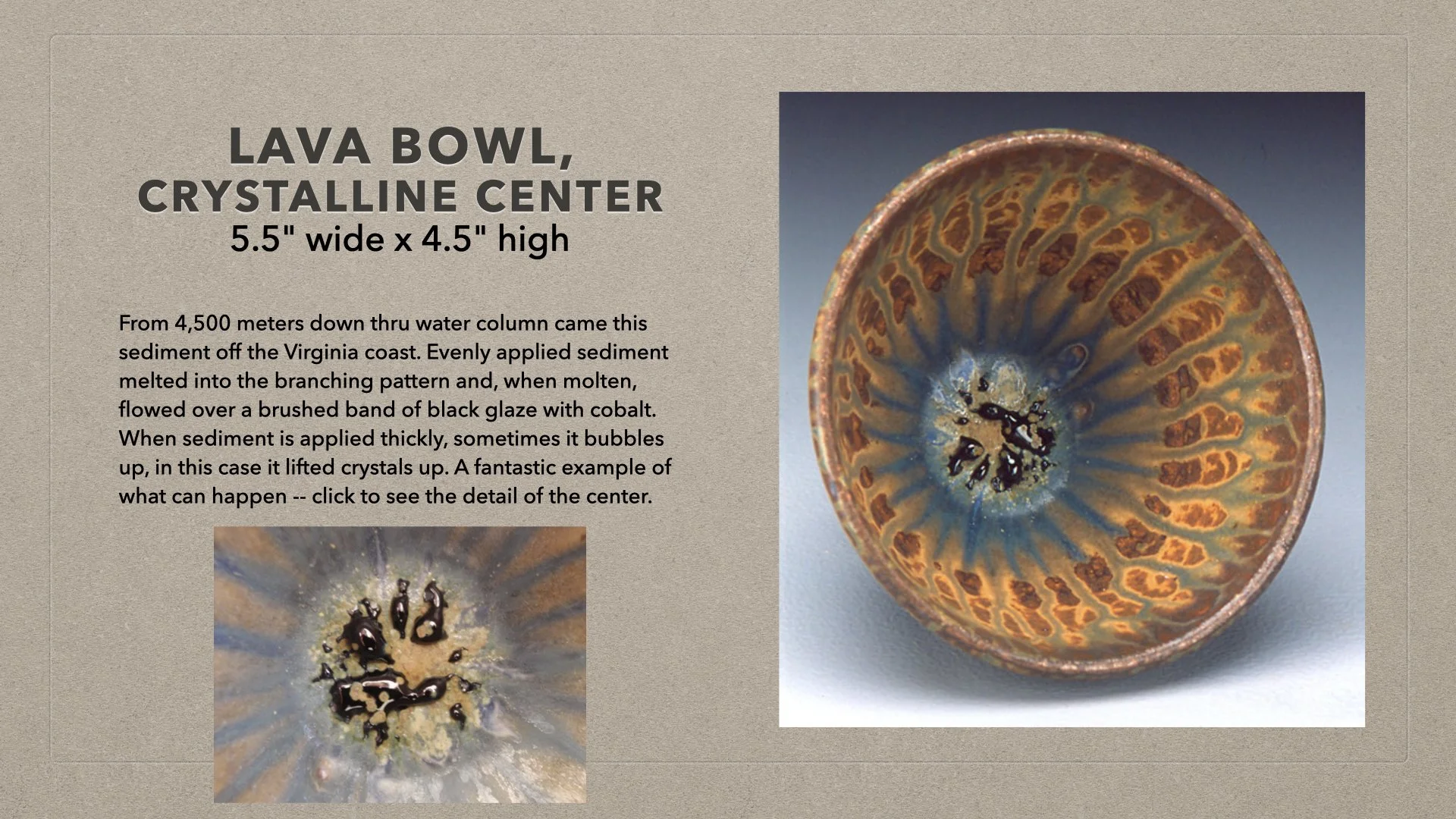
Lava Lifted Crystals - $1,650
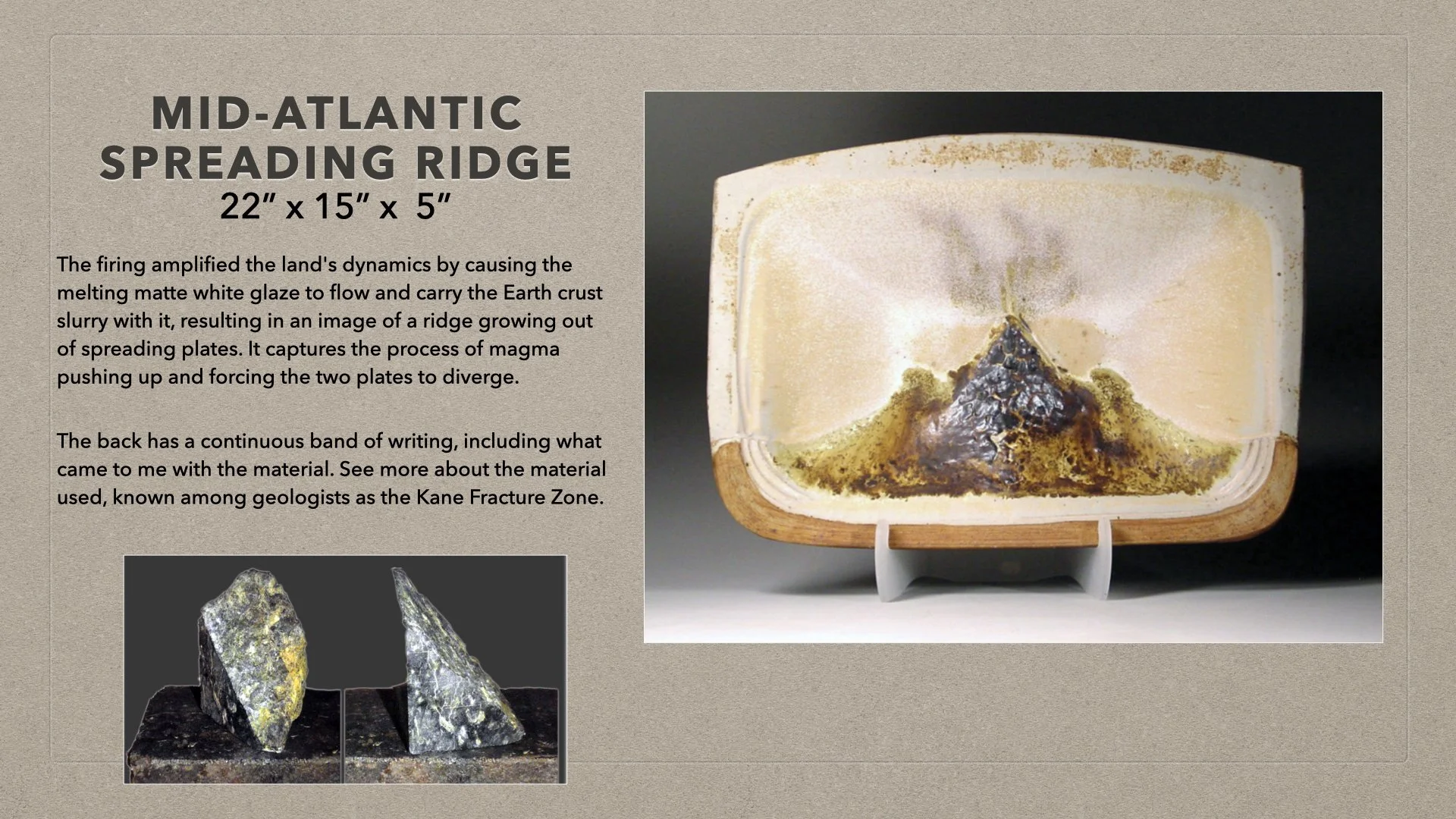
Mid-Atlantic Ridge - $16,000
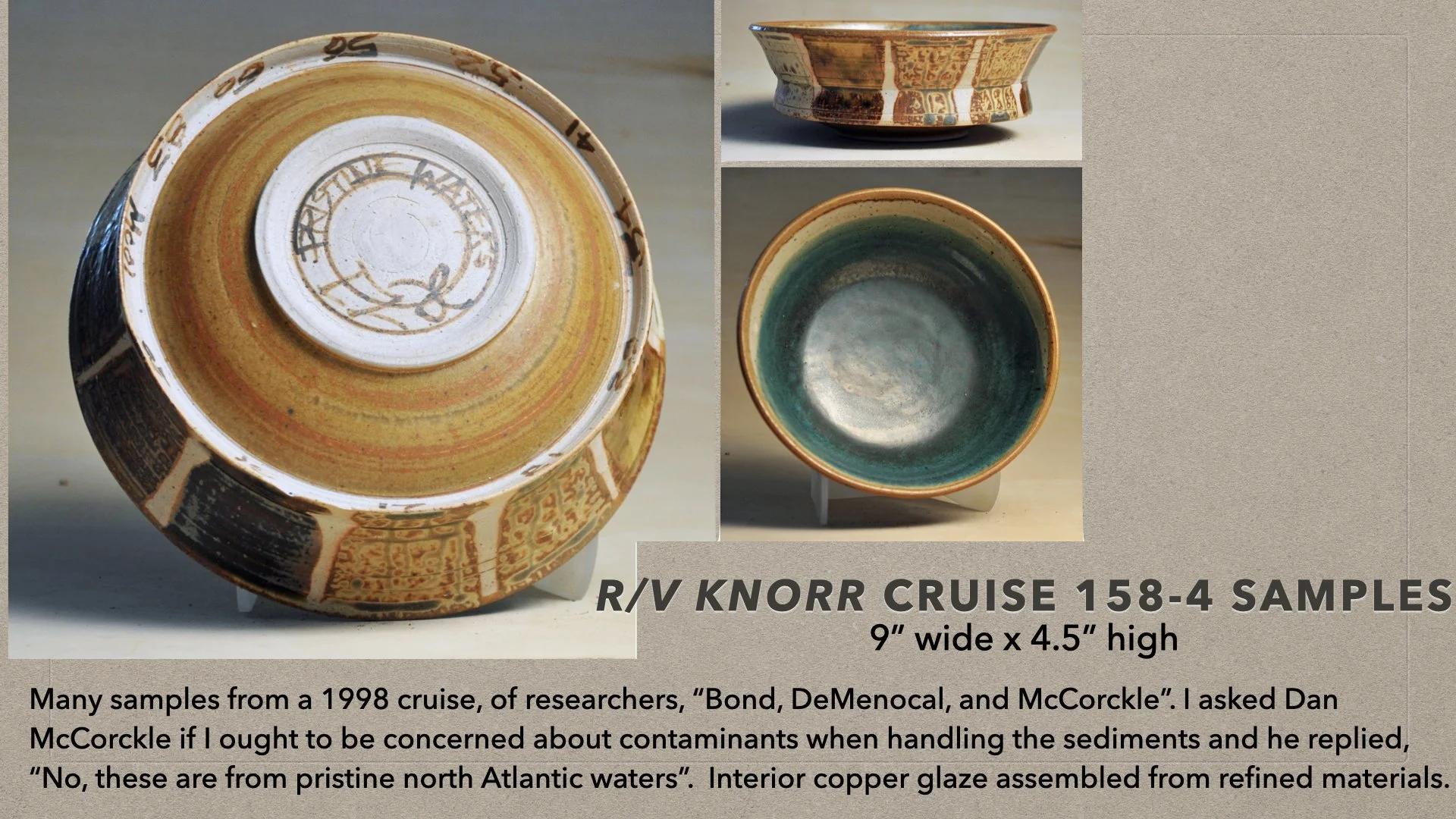
Rv Knorr 158-4 - $1,600
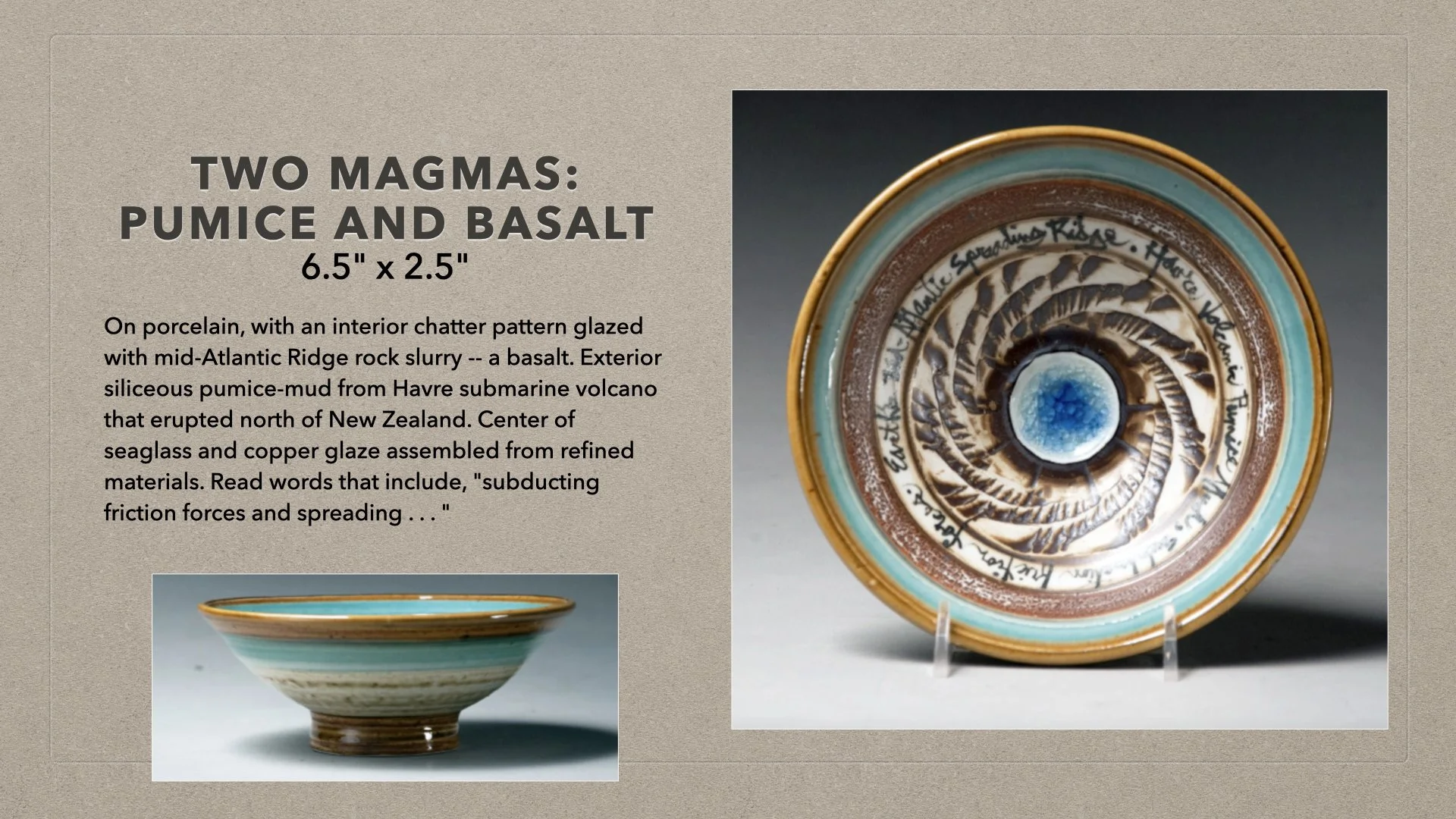
Two Magmas, Pumice & Basalt-$1,975
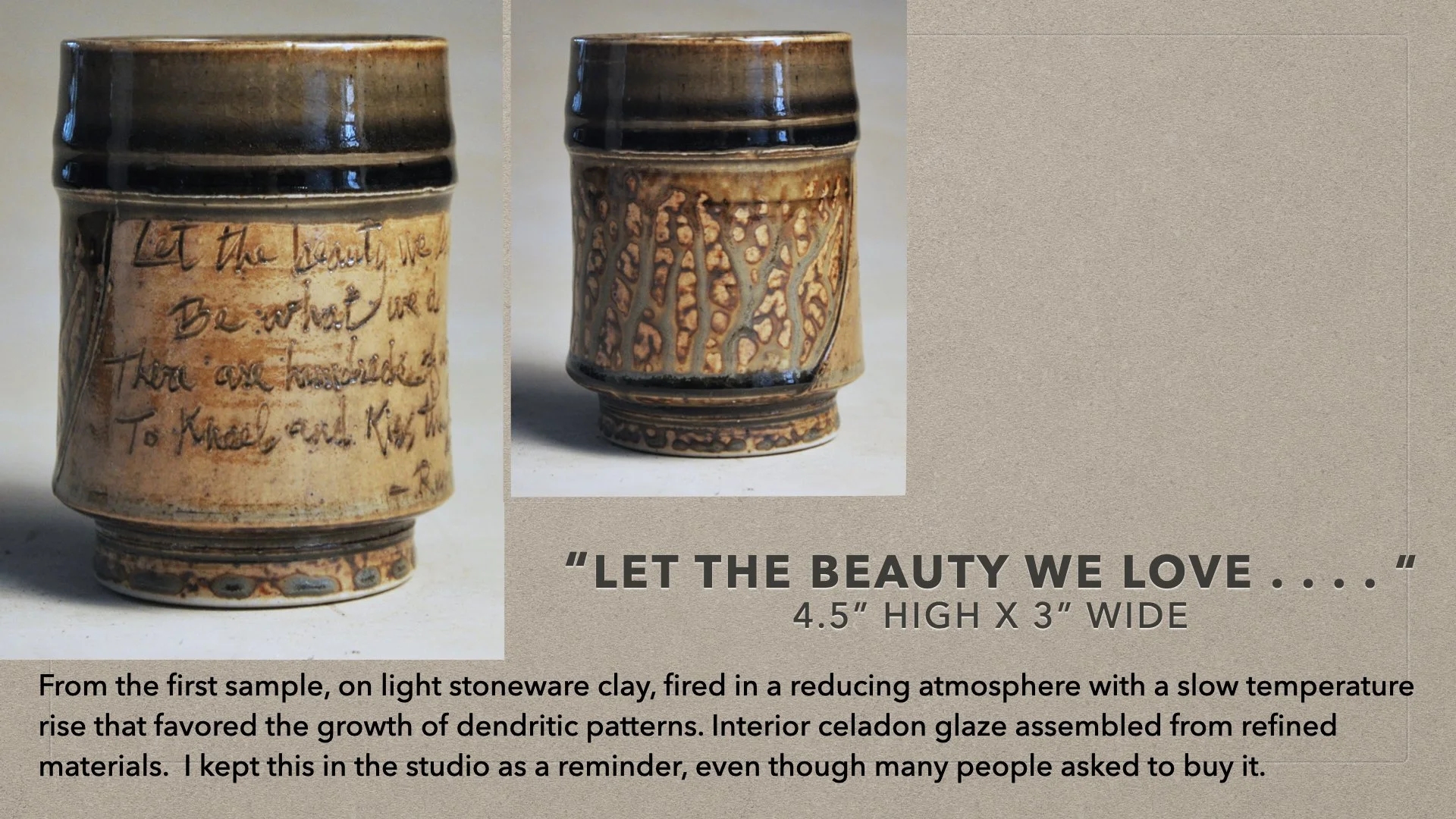
Let the Beauty We Love -$975
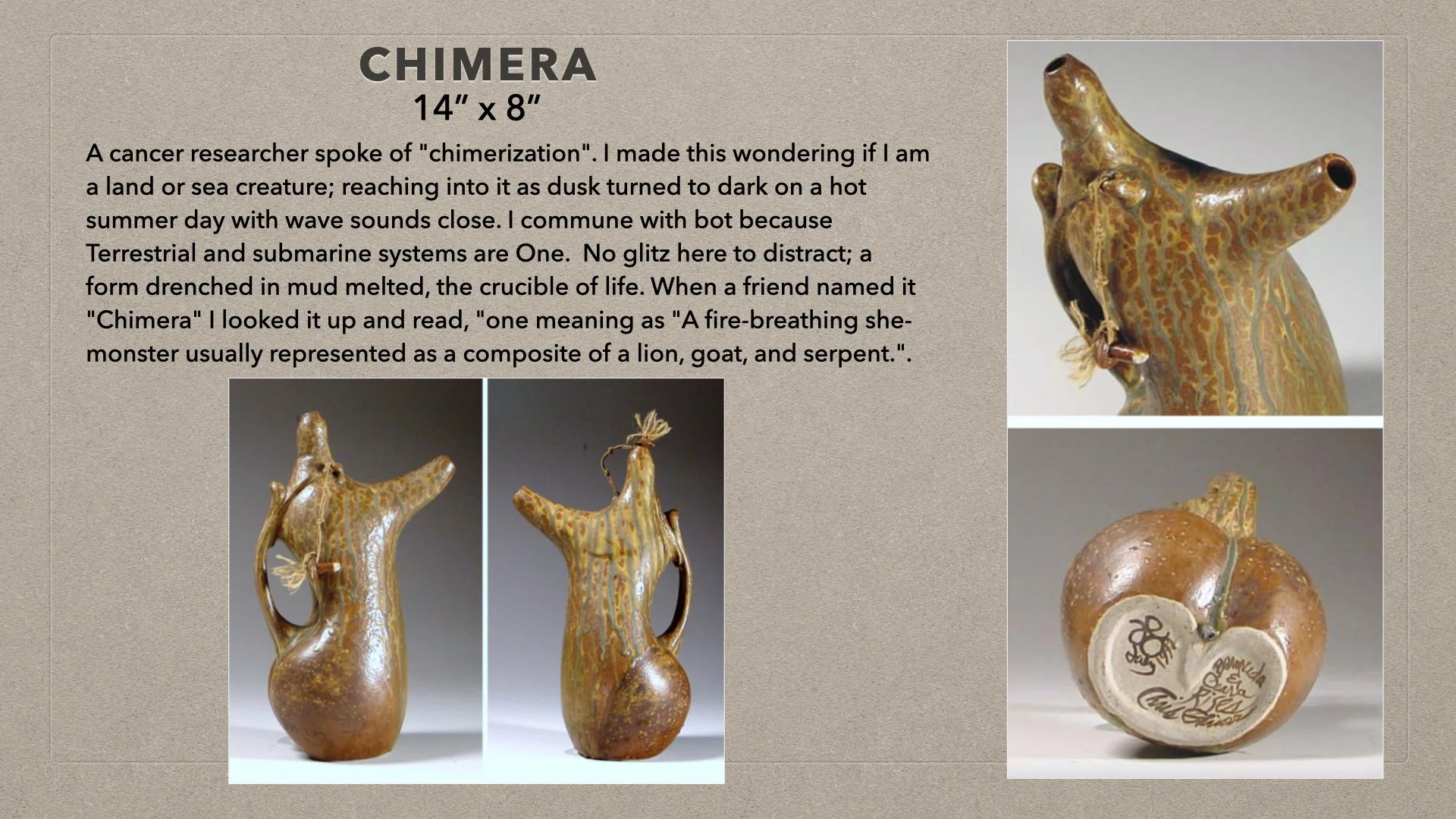
Chimera - $1,975
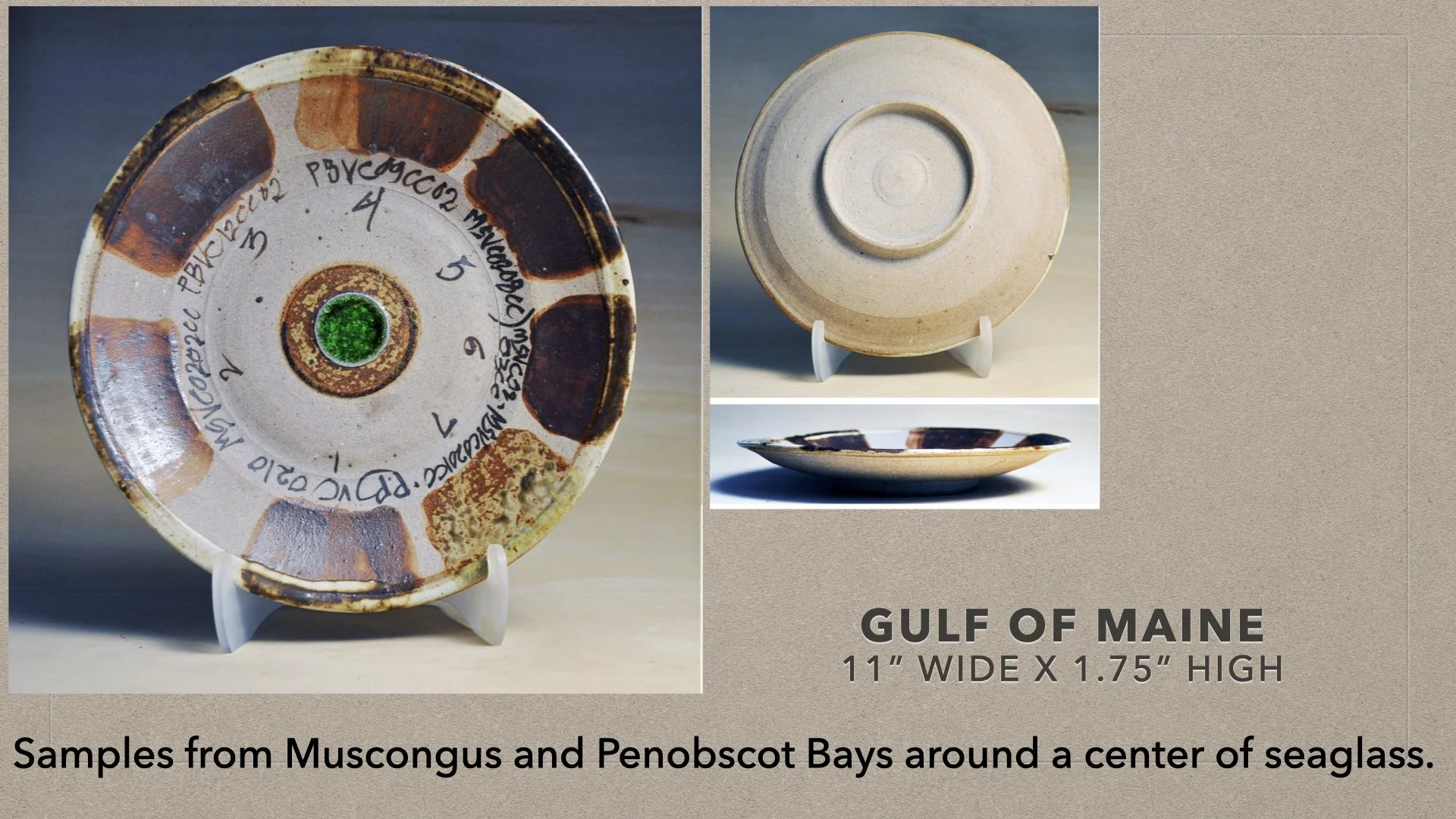
Gulf of Maine - $1,650
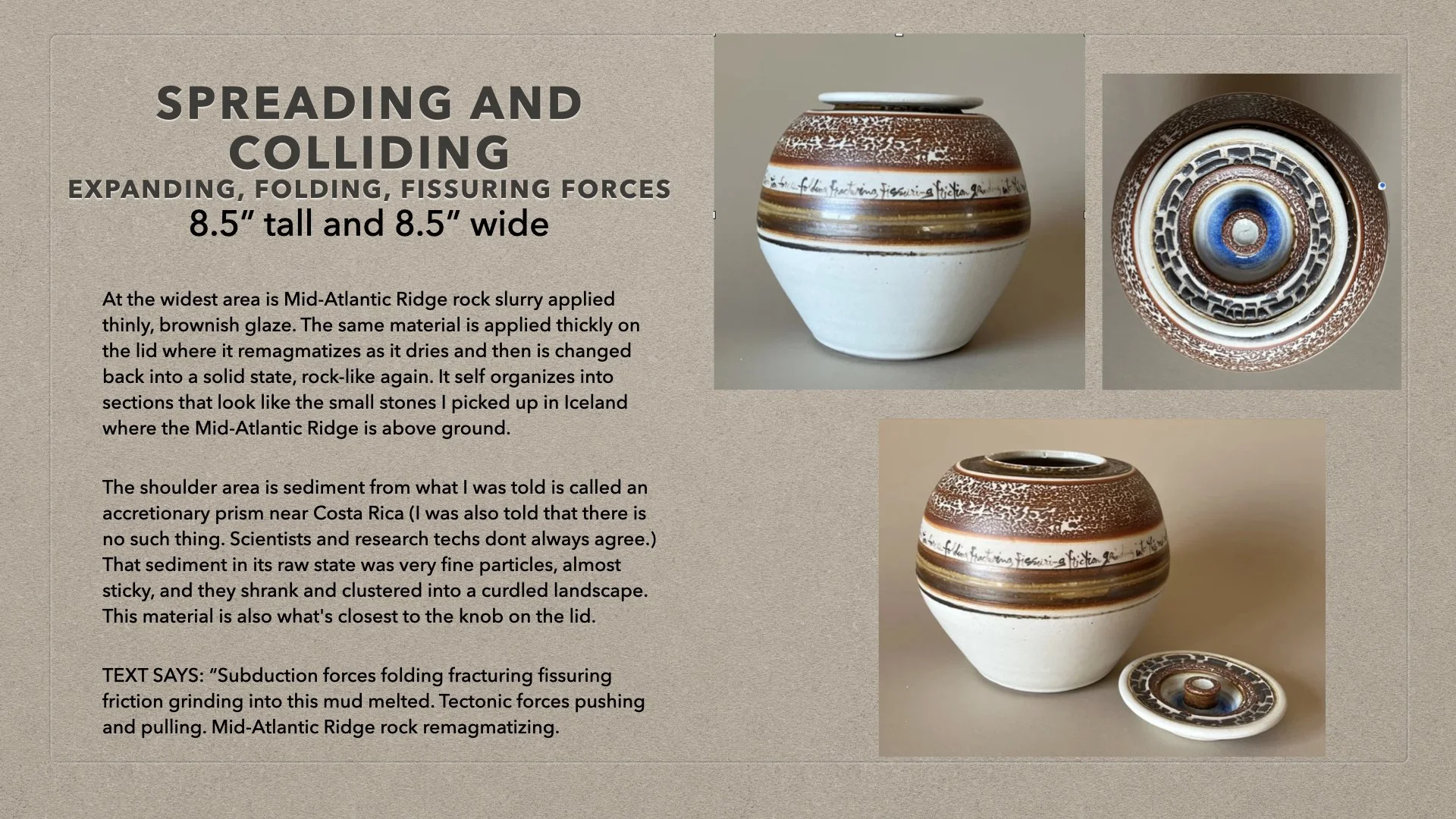
Spreading & Colliding -$4,200
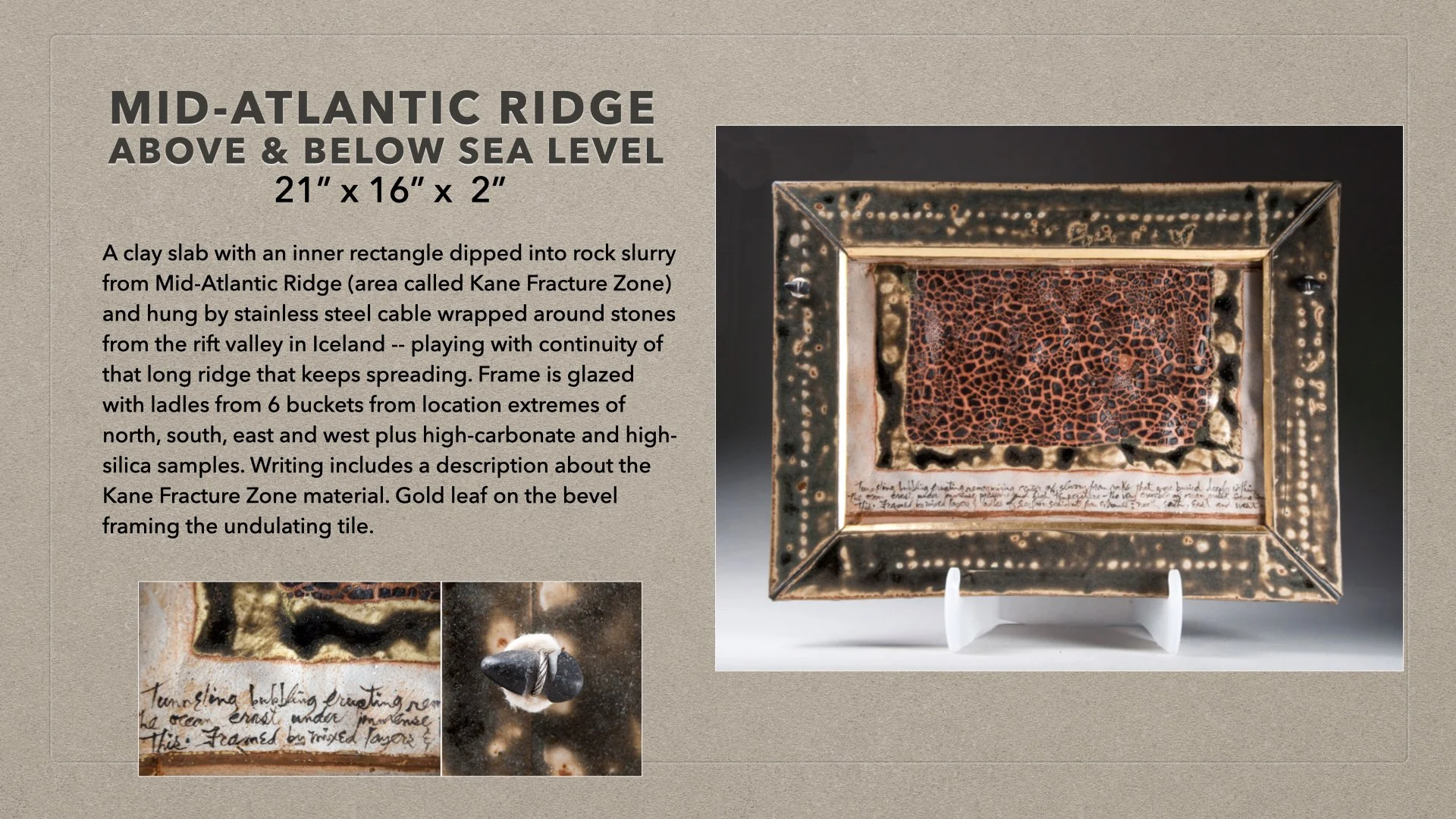
Above and Below Sea Level -$3,600
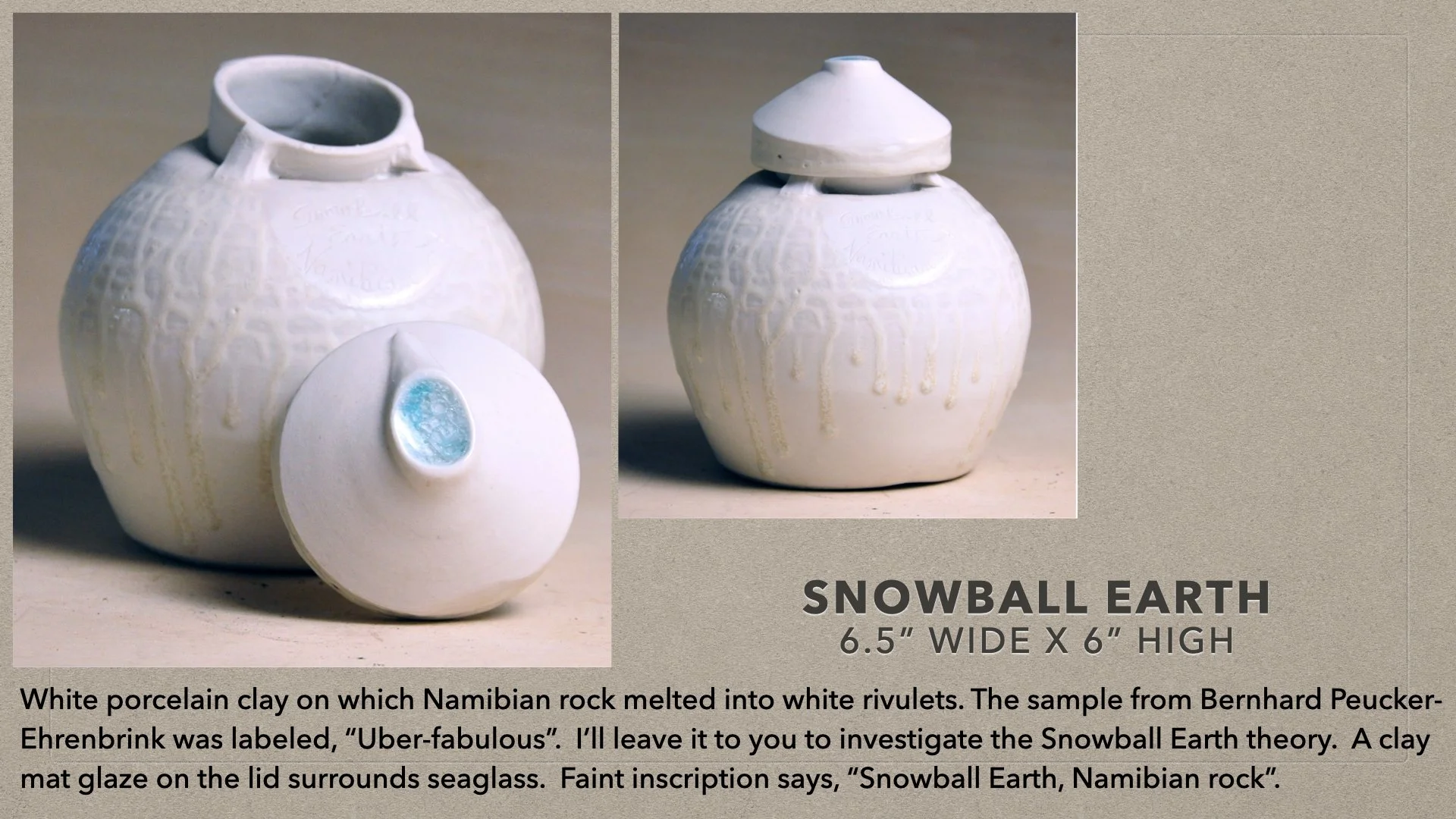
Snowball Earth -$2,275
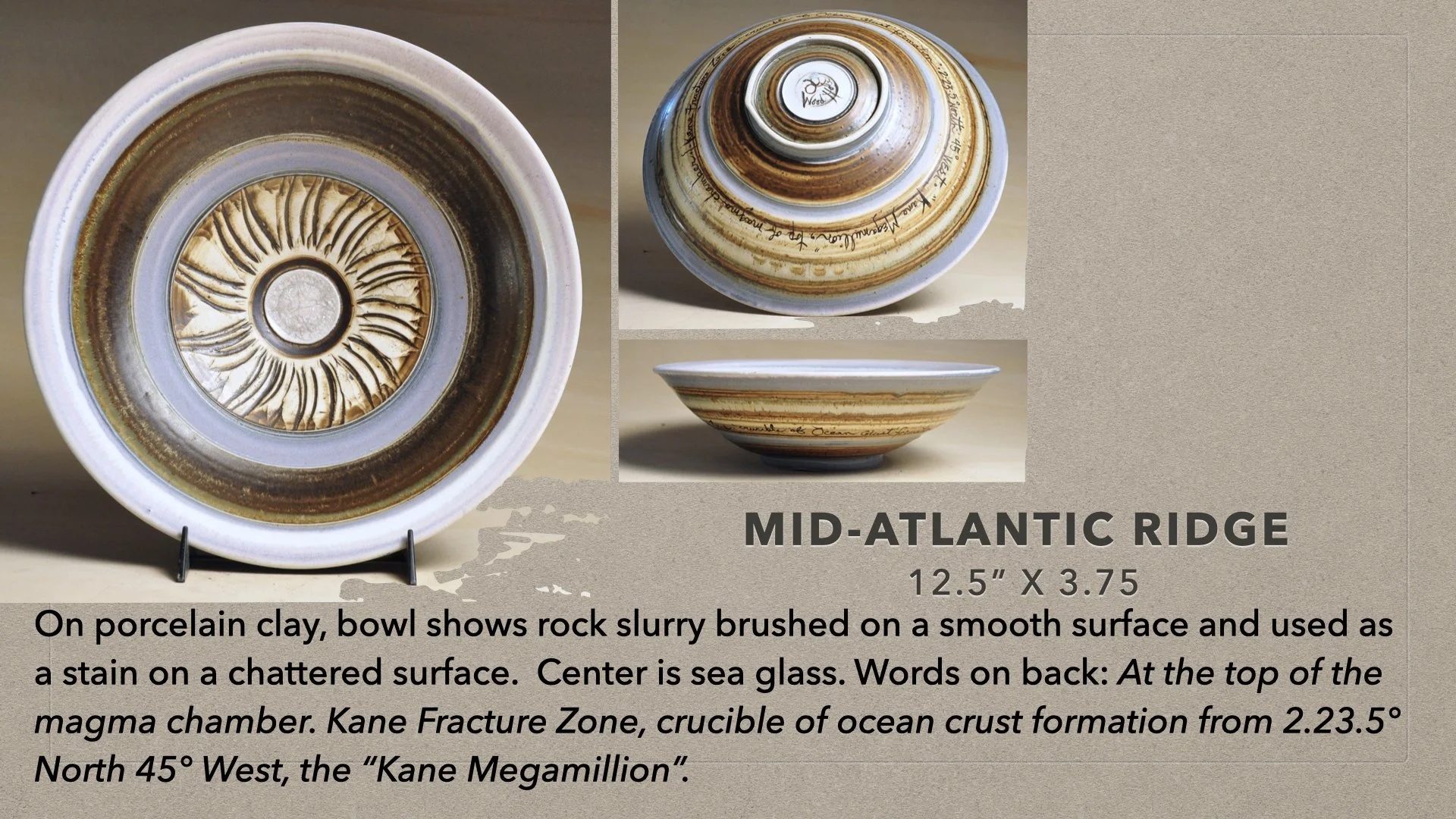
Mid-Atlantic Ridge - $3,250
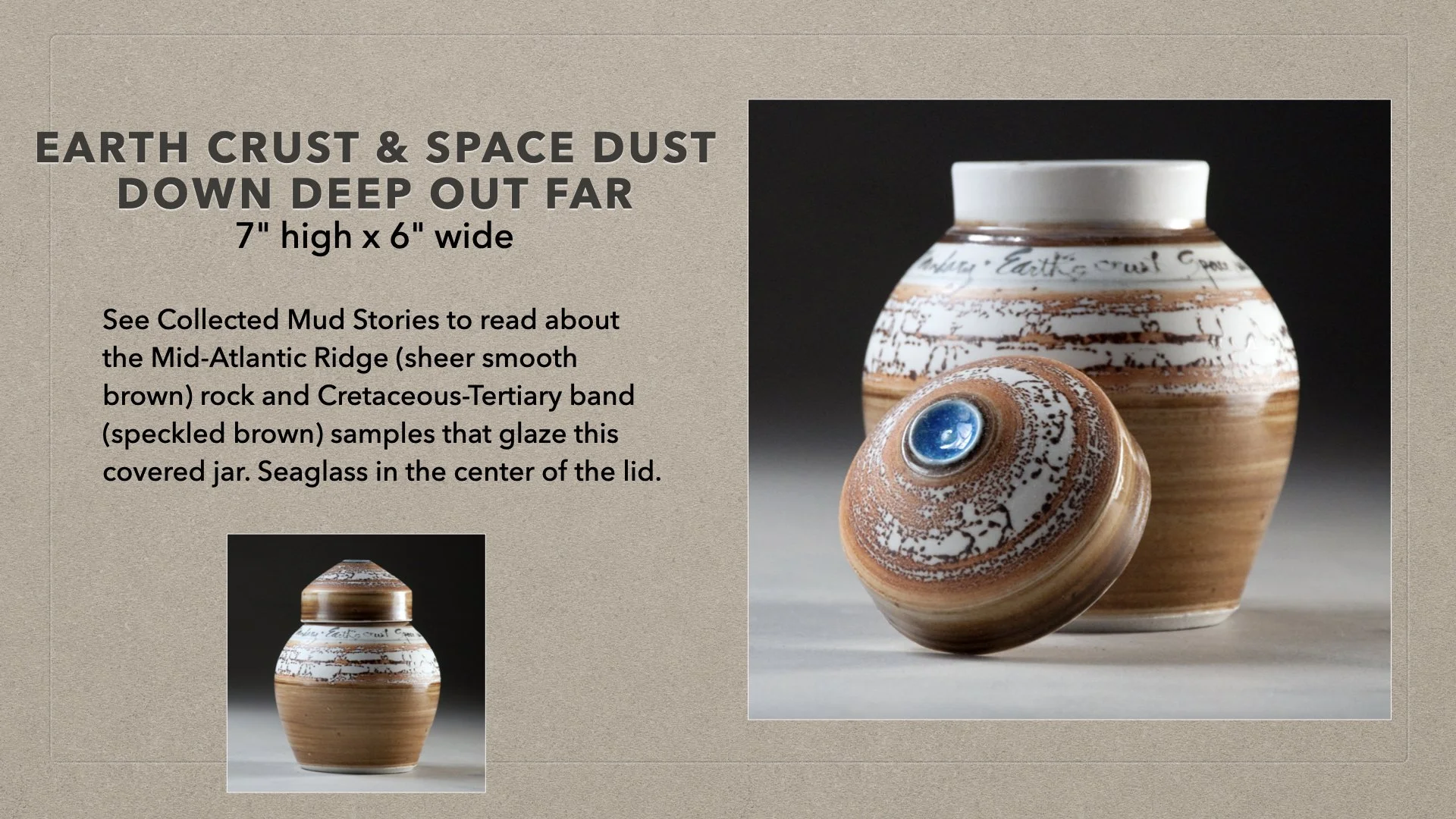
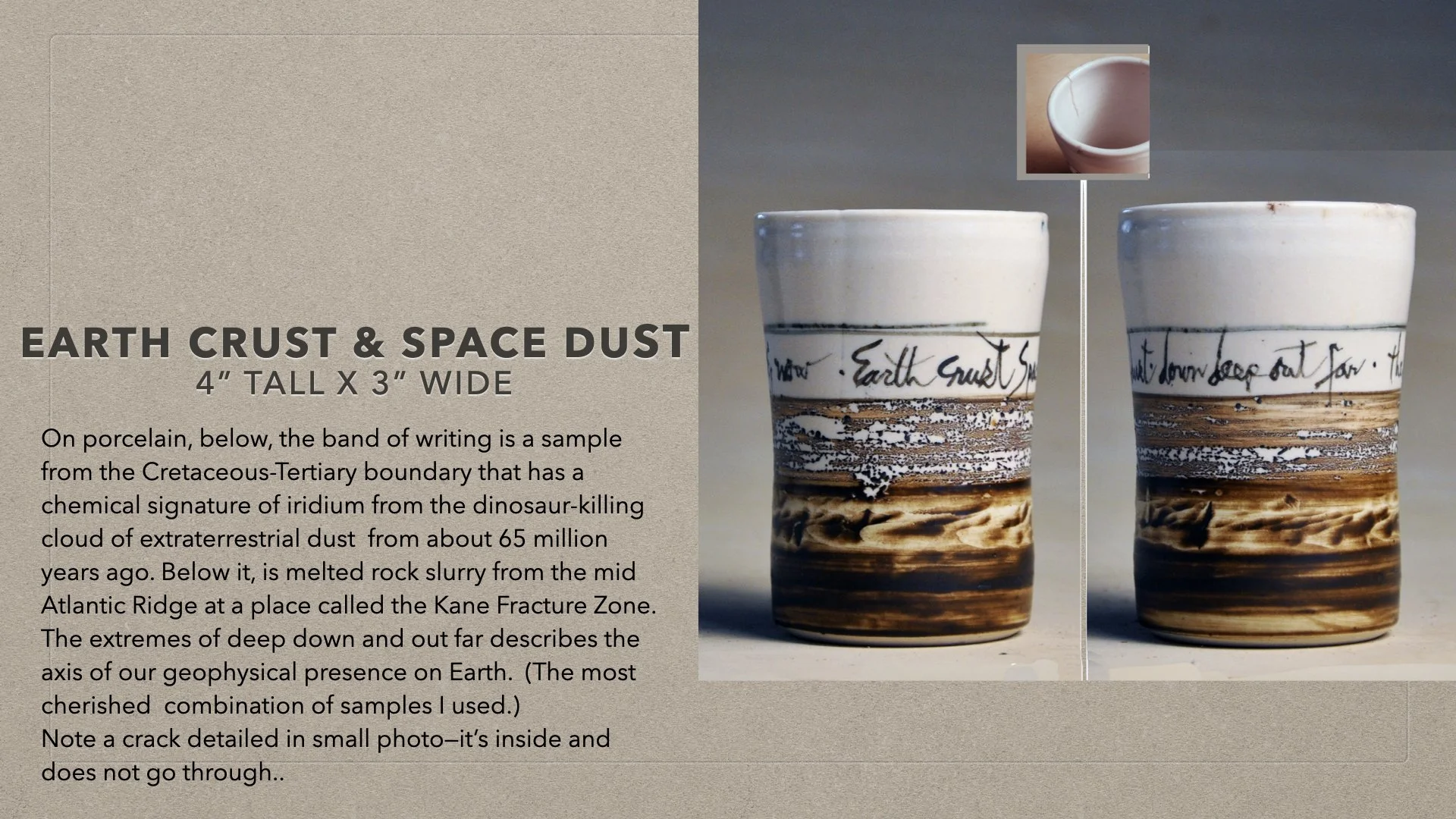
Earth Crust and Space Dust- $2,600
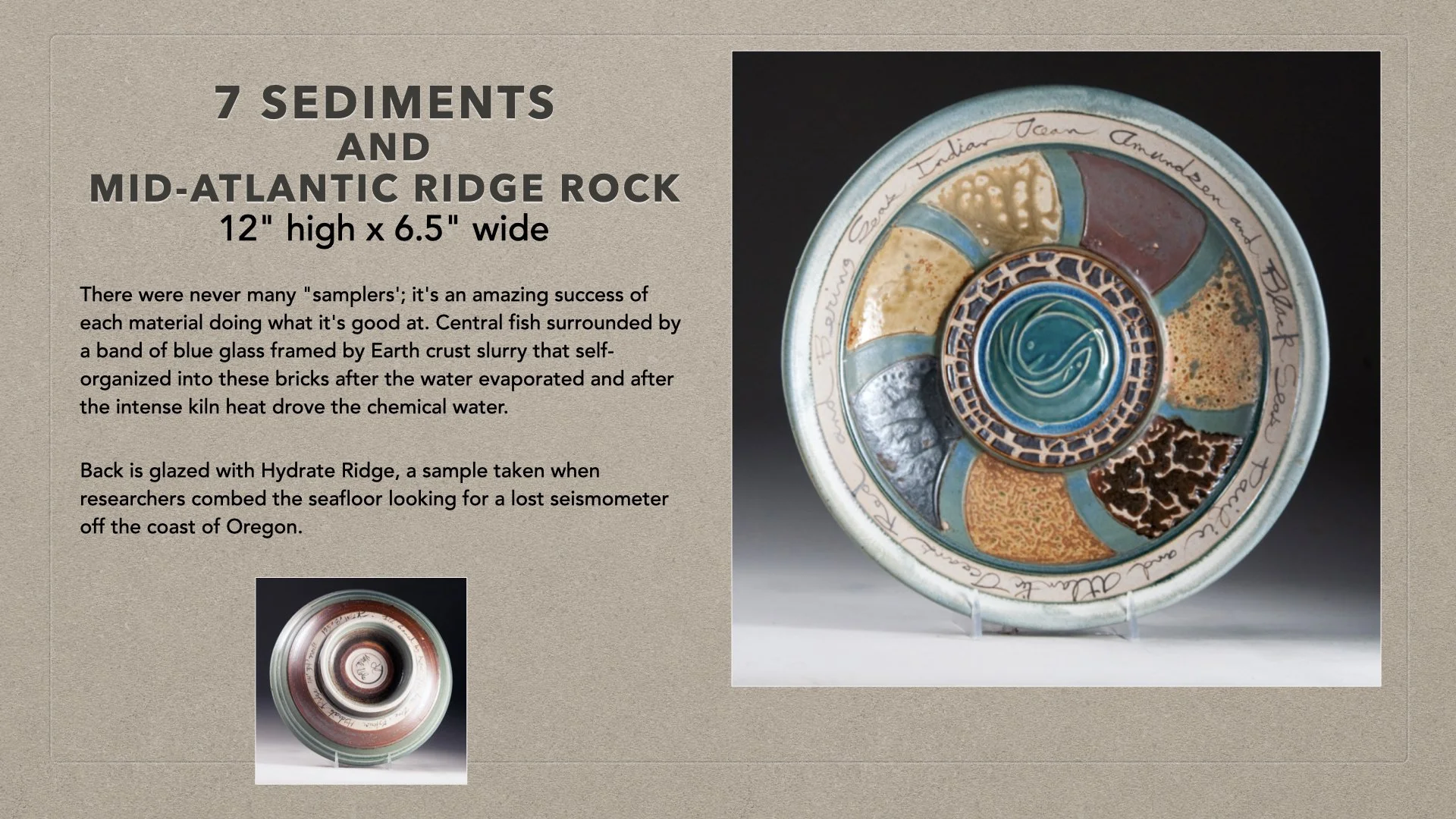
Seven Seas and Earth Crust: $23,000
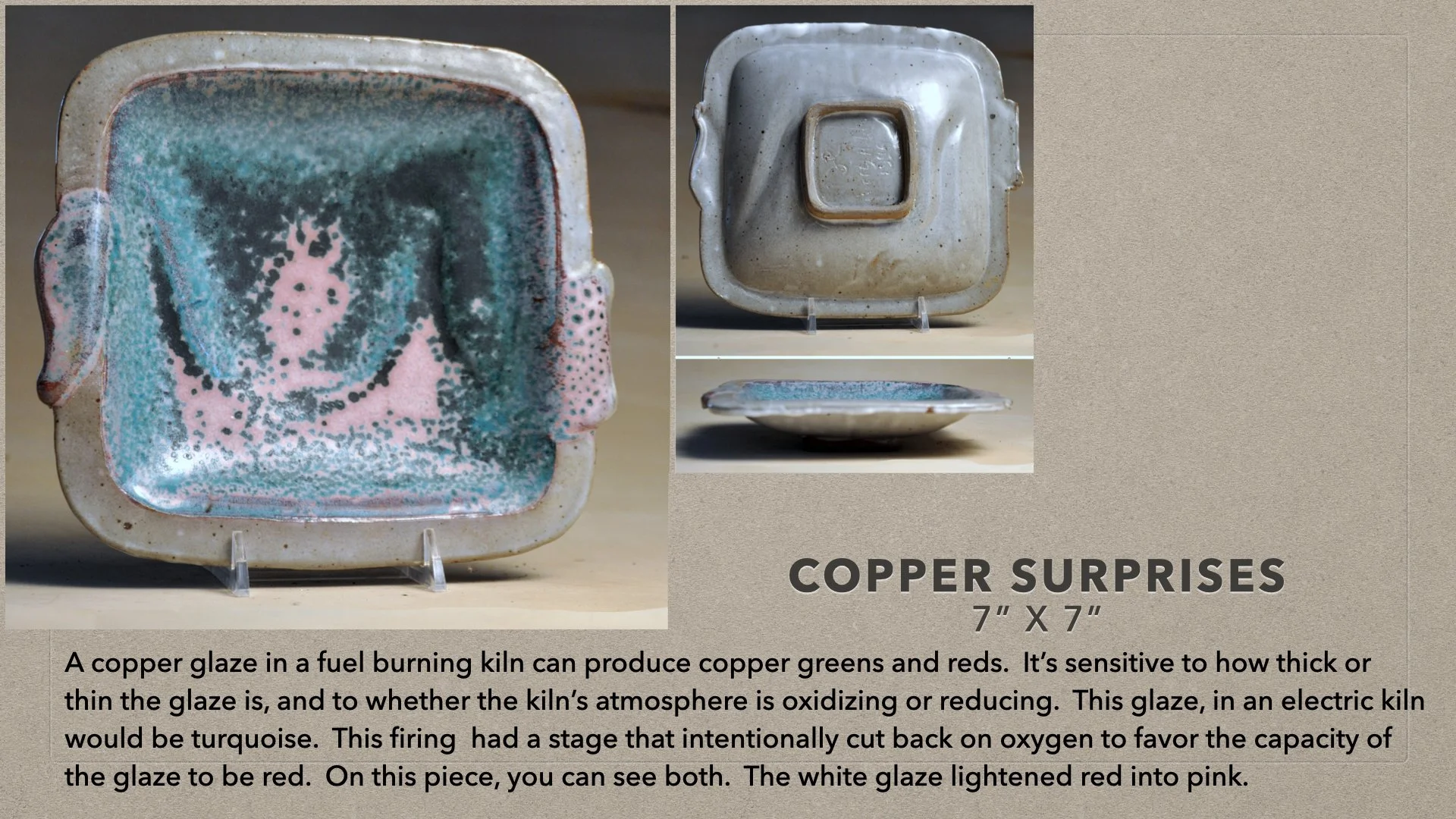
Copper Red-to-Green - $275
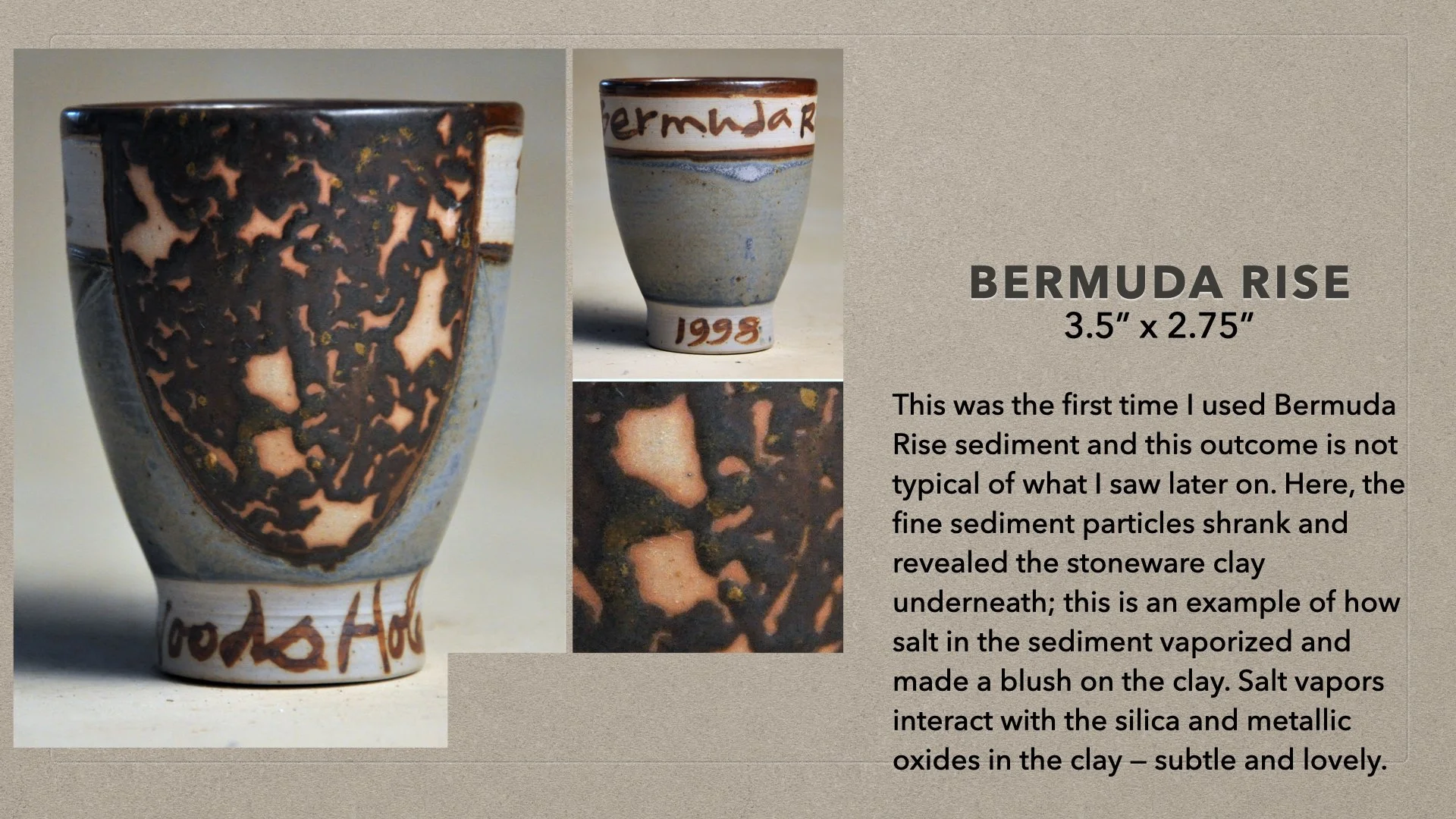
Bermuda Rise Cup - $300
Robotic Pinchers at Titanic Site $200
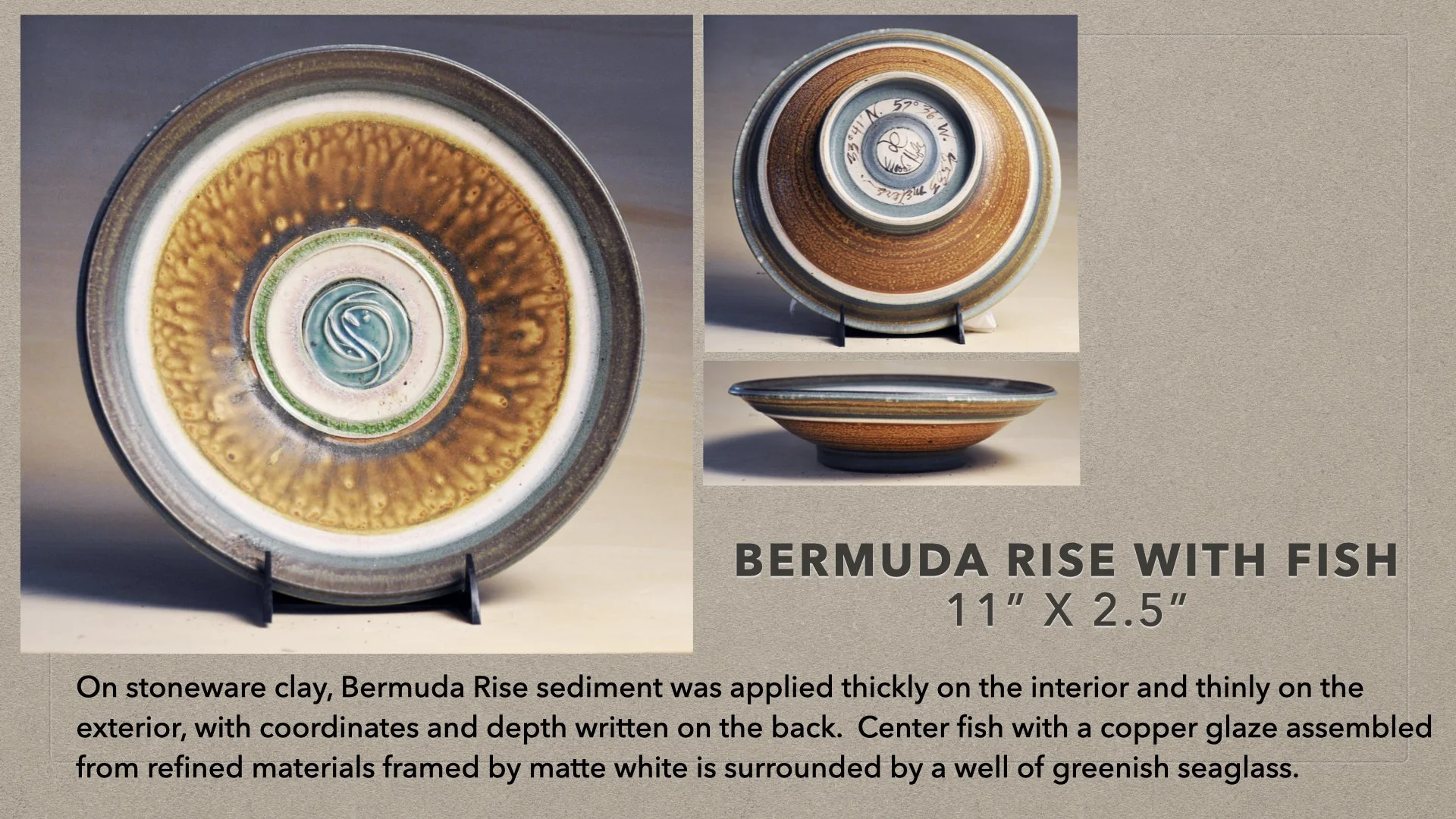
Bermuda Rise - $775
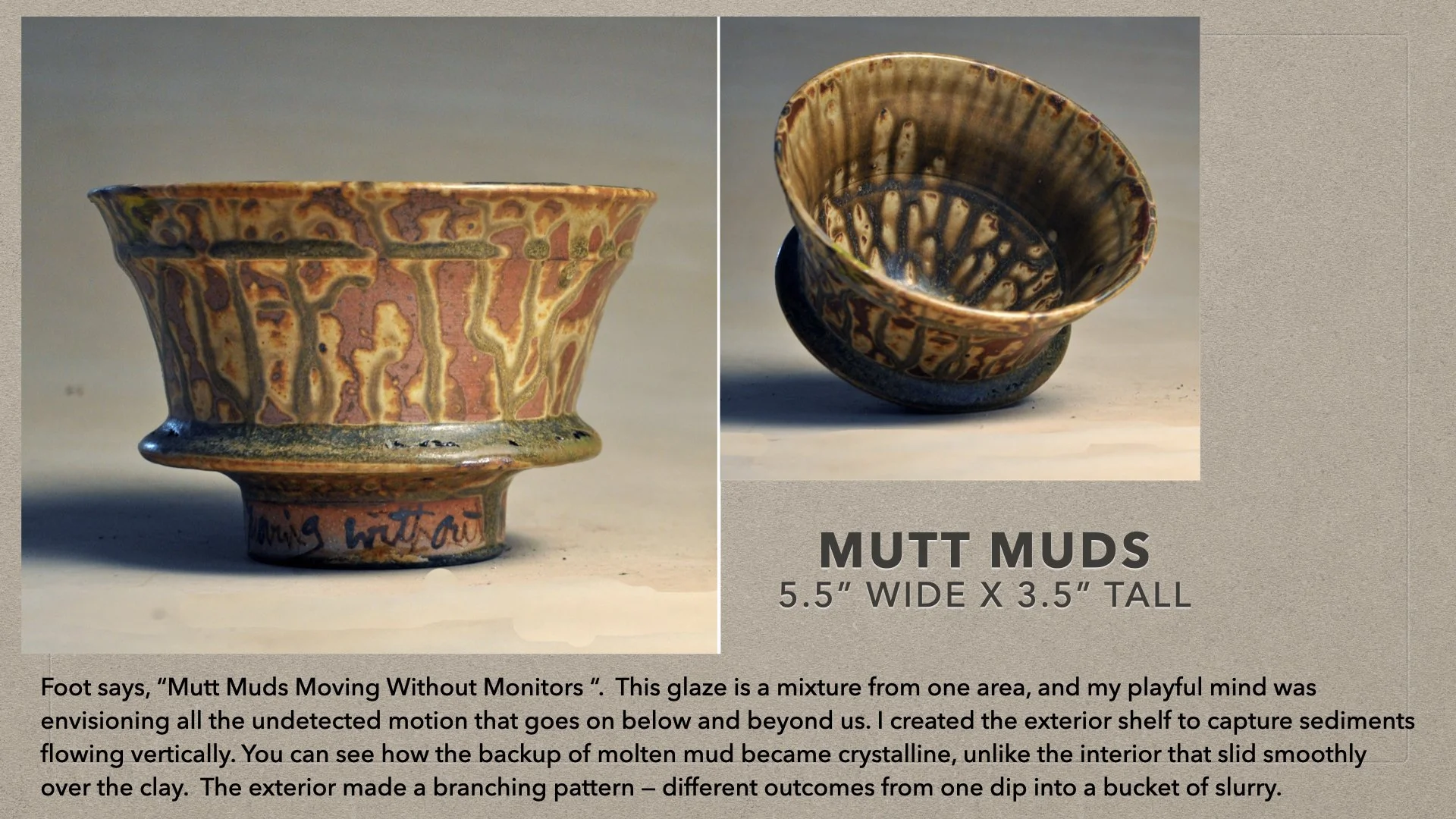
Mutt Muds -$375
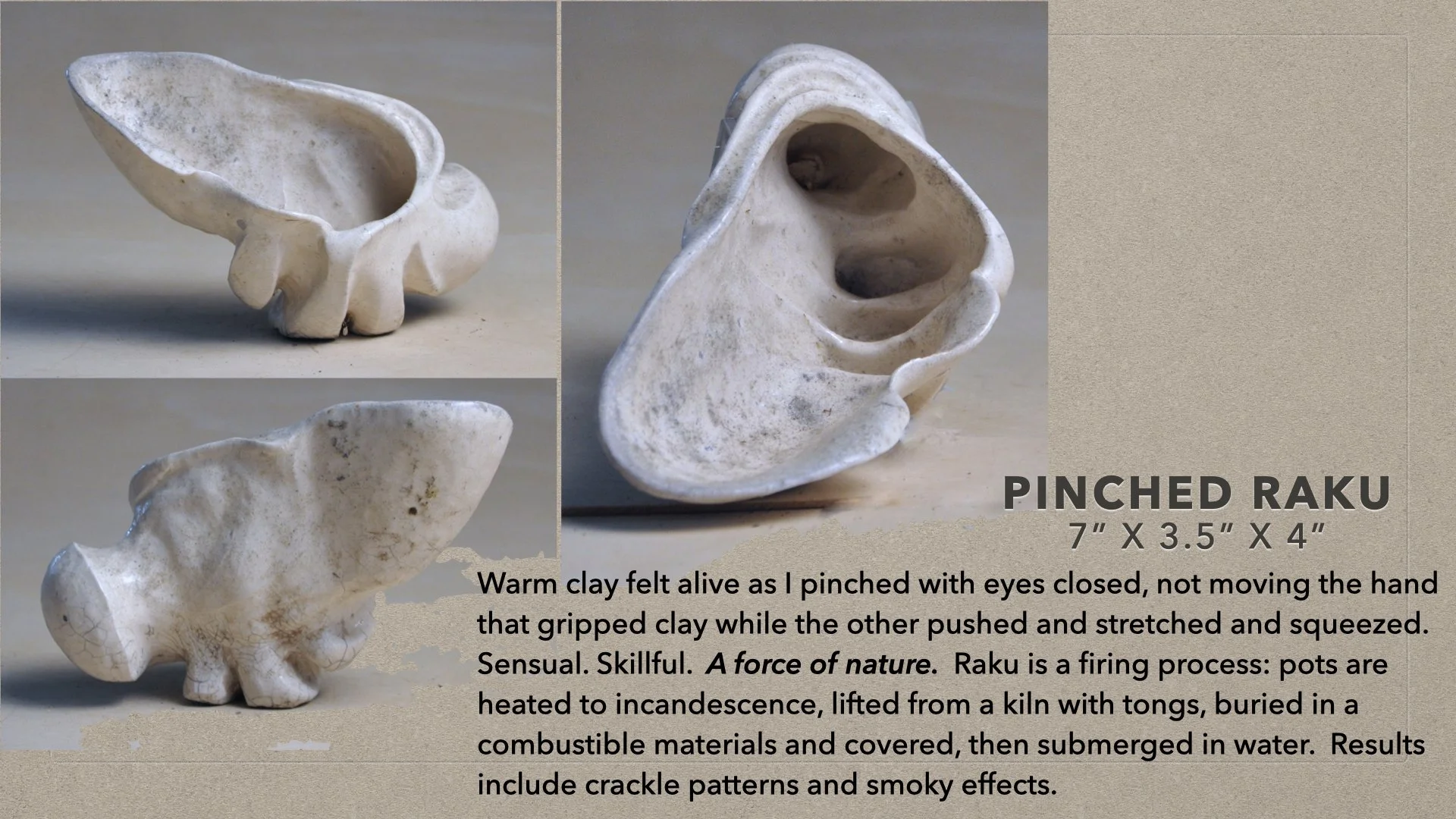
Pinched Raku -$1,200
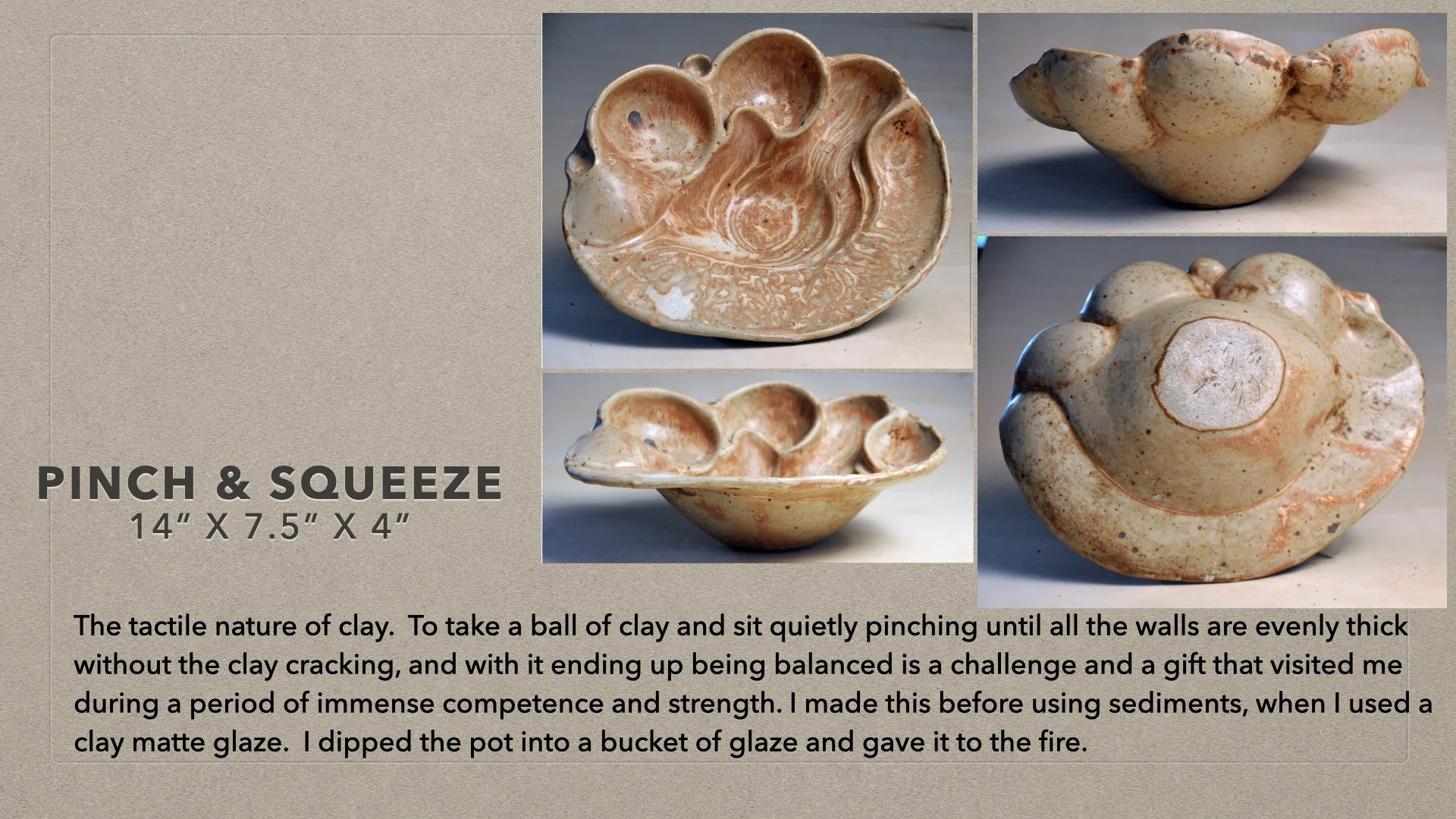
Pinch and Squeeze - $1,750
Discovery Slideshow
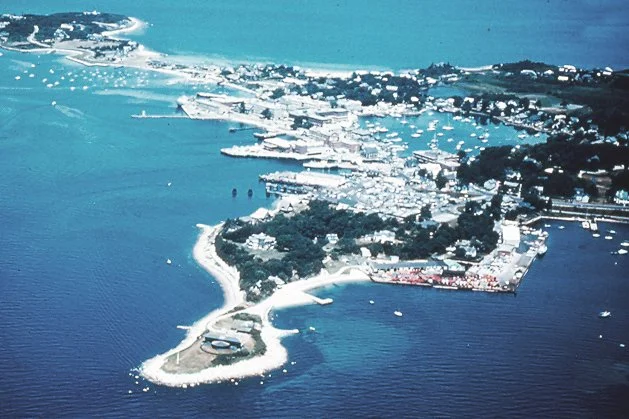
Aerial View of Woods Hole
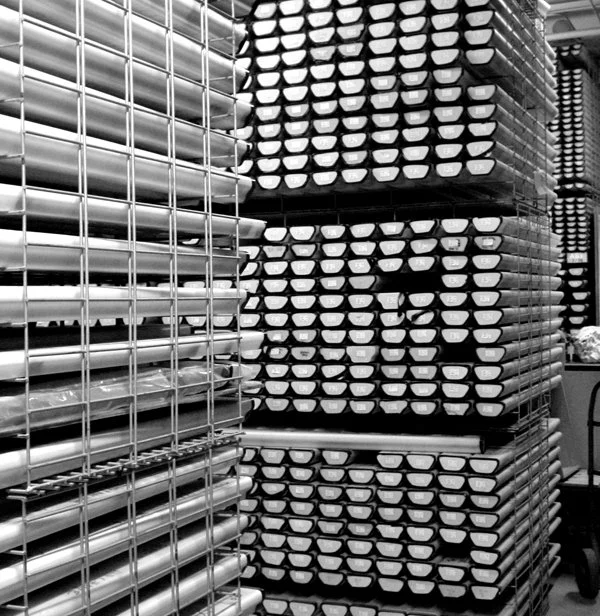
Core Archive at WHOI
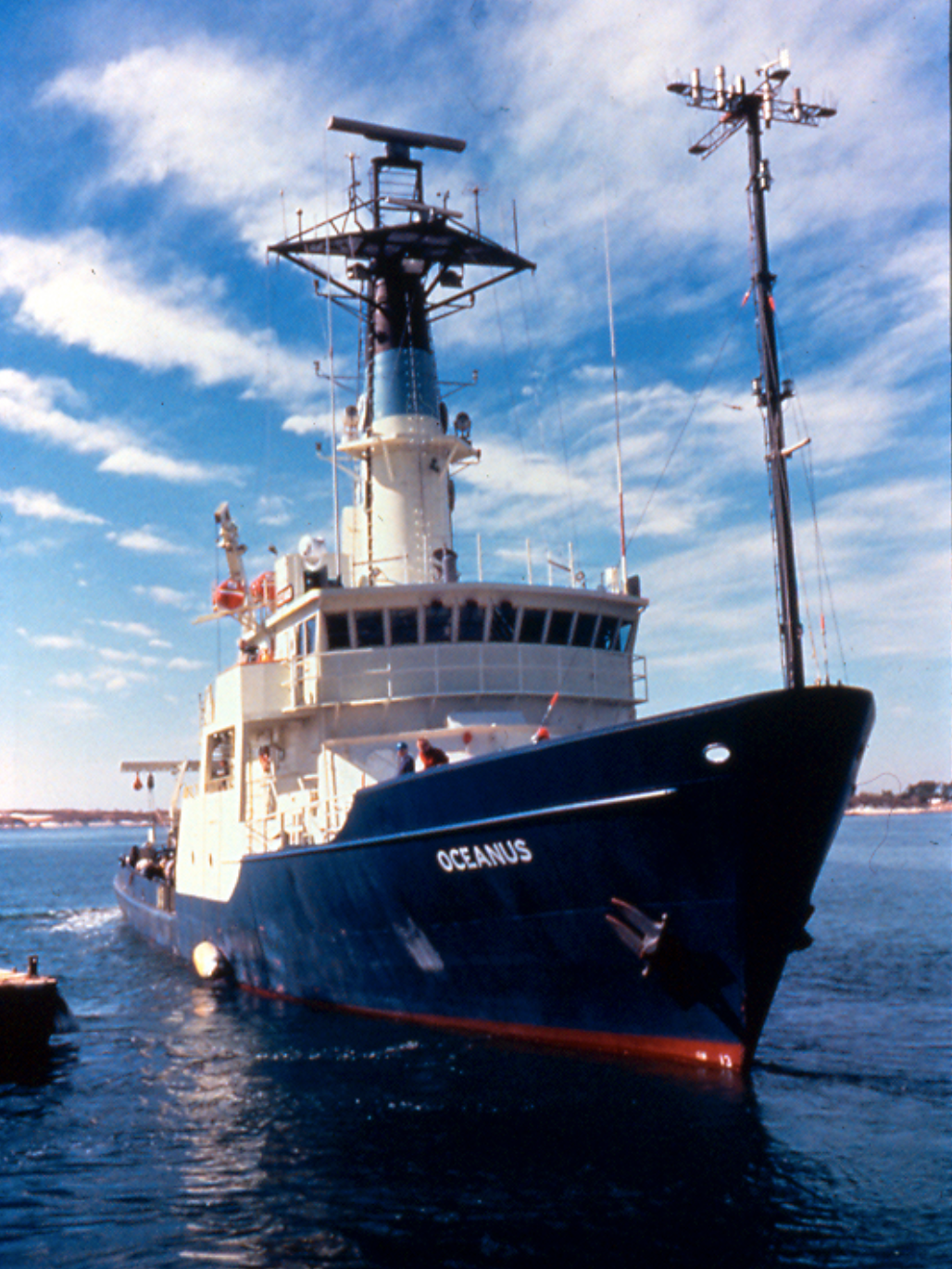
R/V Oceanus
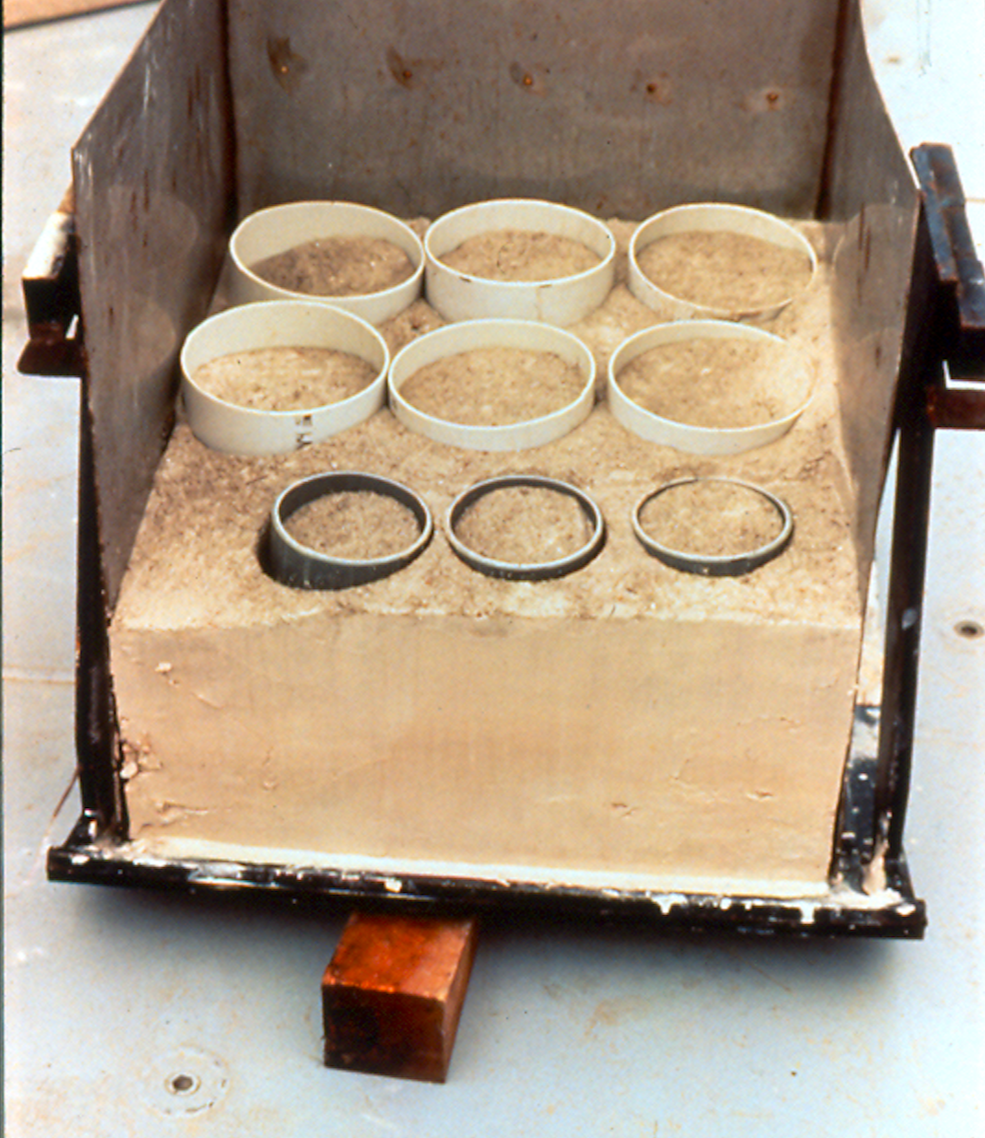
Box Core
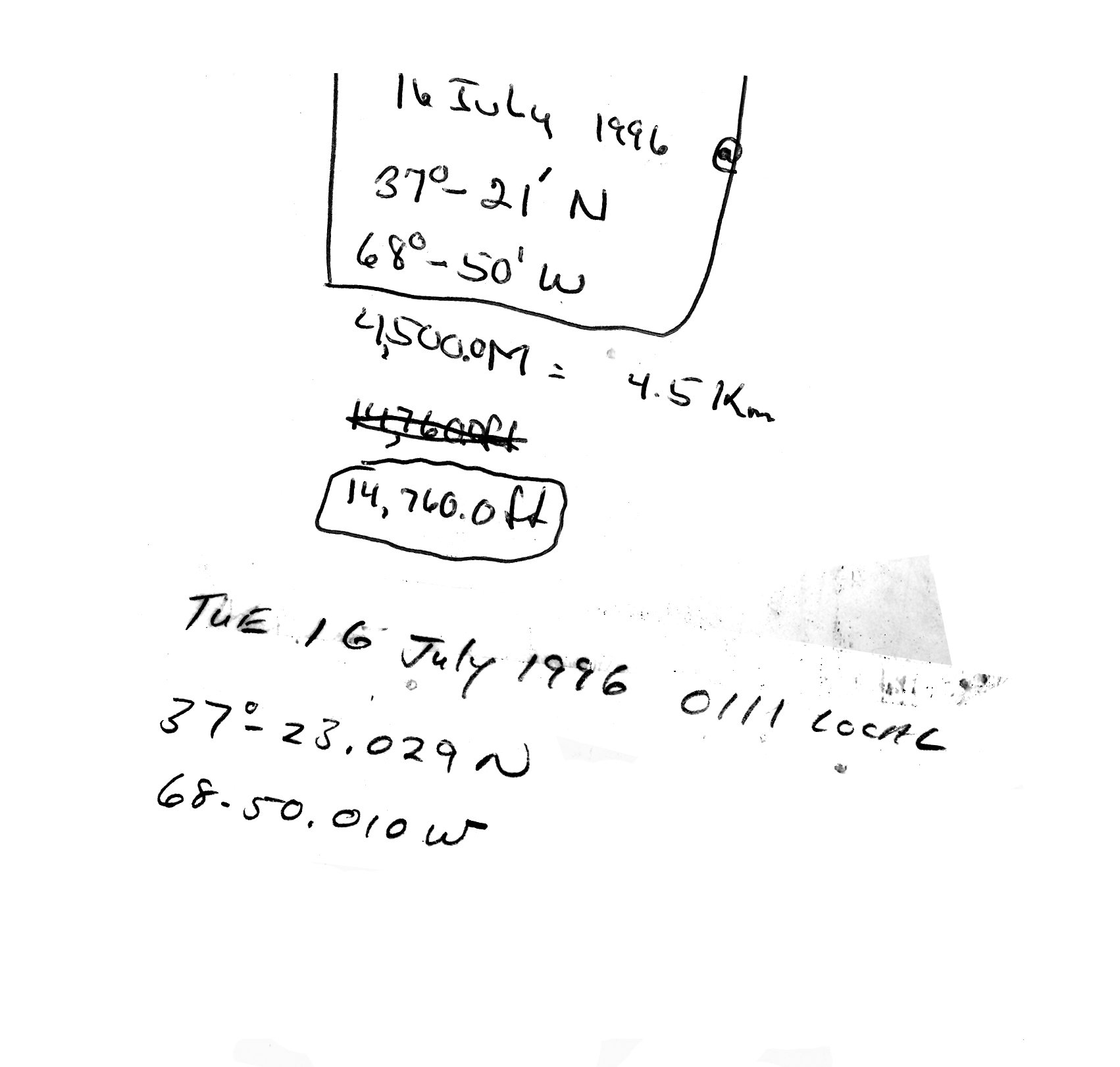
Chris Griner's Sticky with Coordinates
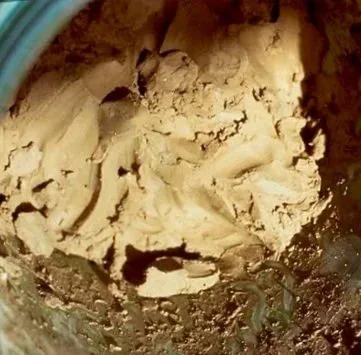
Mud from Box Core
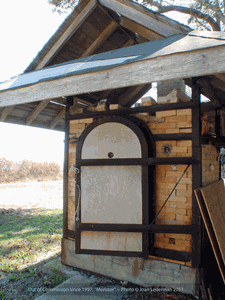
Kiln in service 1979 to 1997
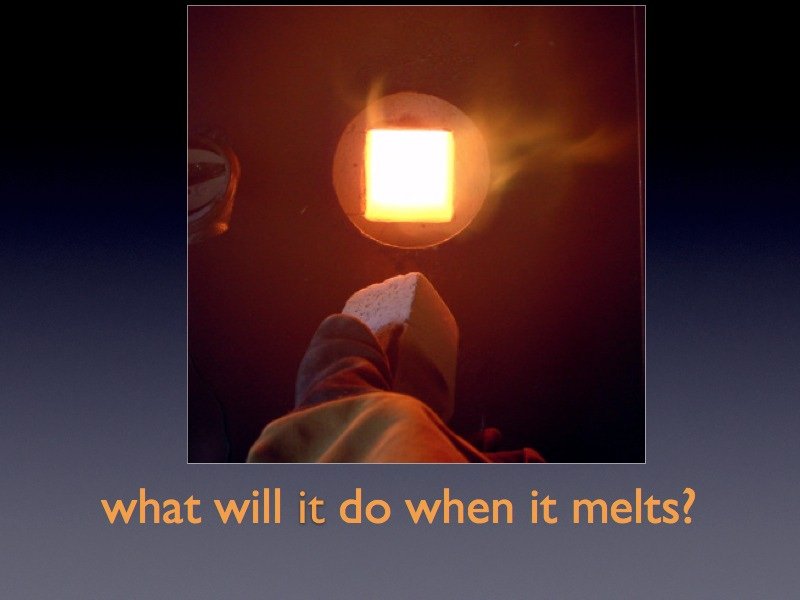
Spyhole Where First Mud Was Placed
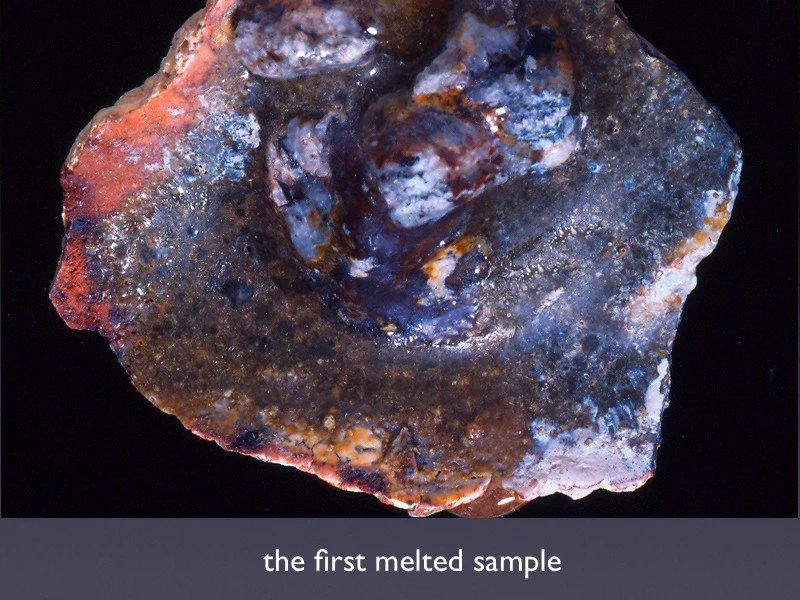
First Fired Glob
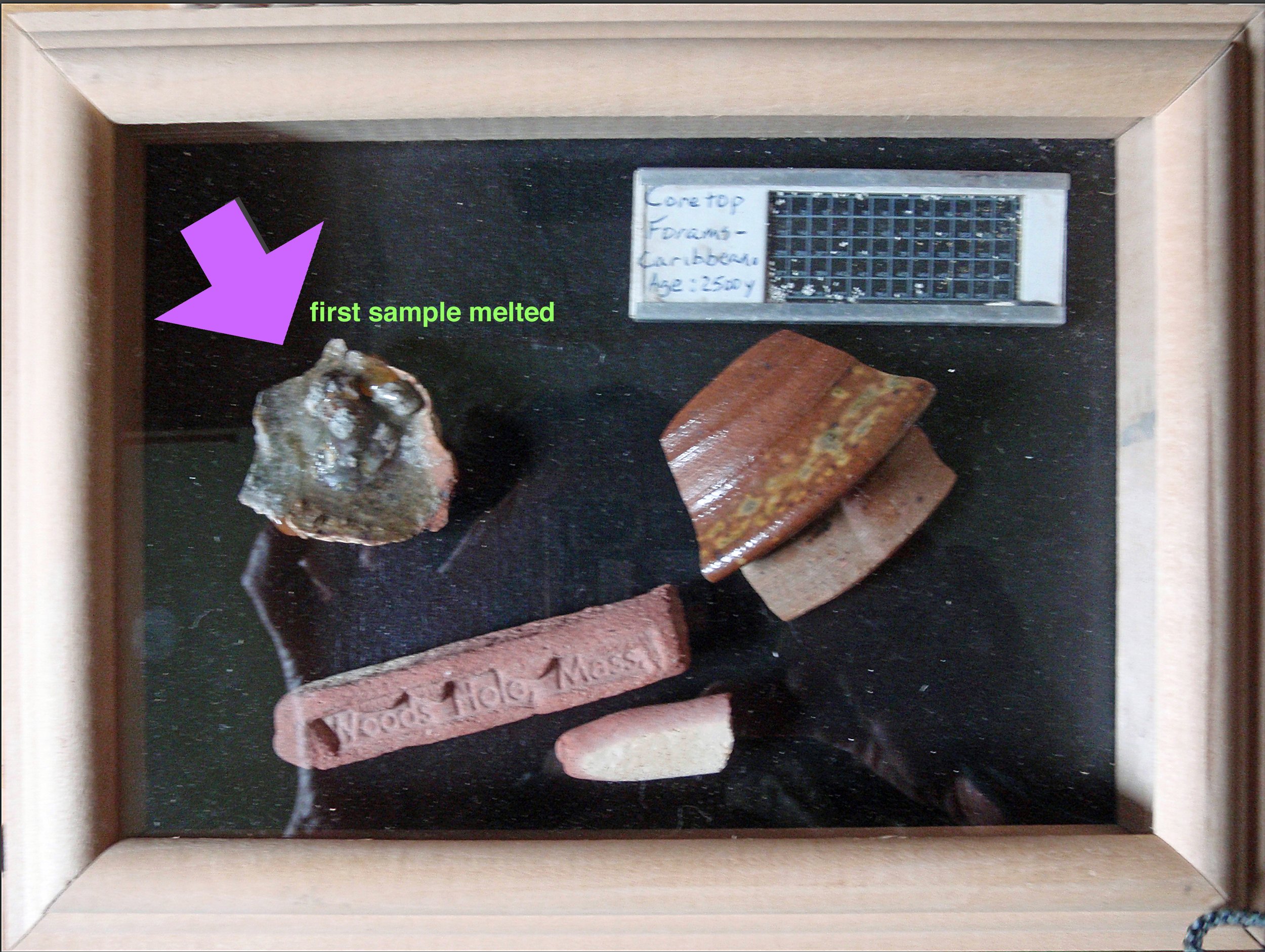
More Tests Varied Temperatures
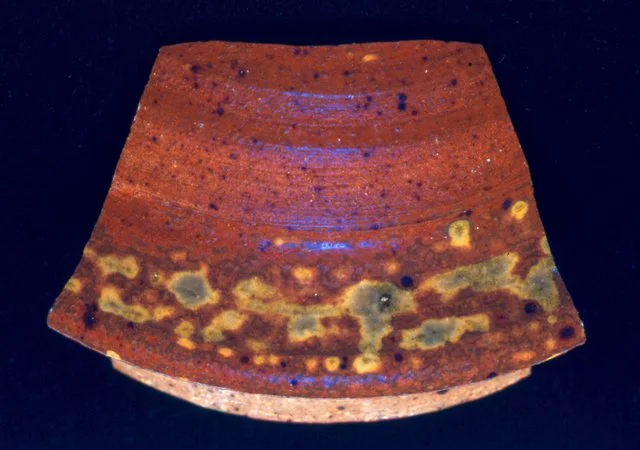
Speckles of Forams, Third Test
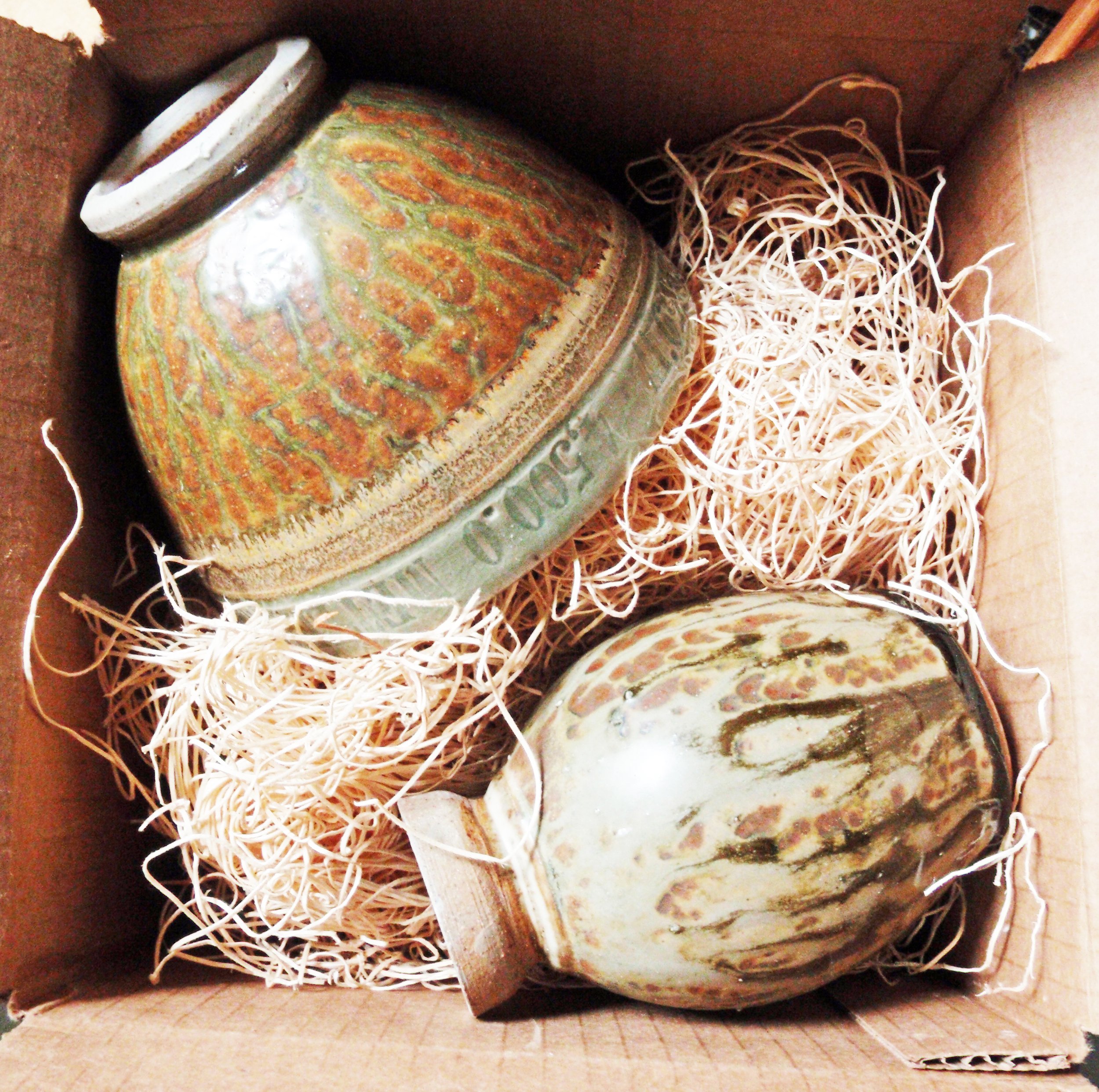
Fourth and Fifth Tests
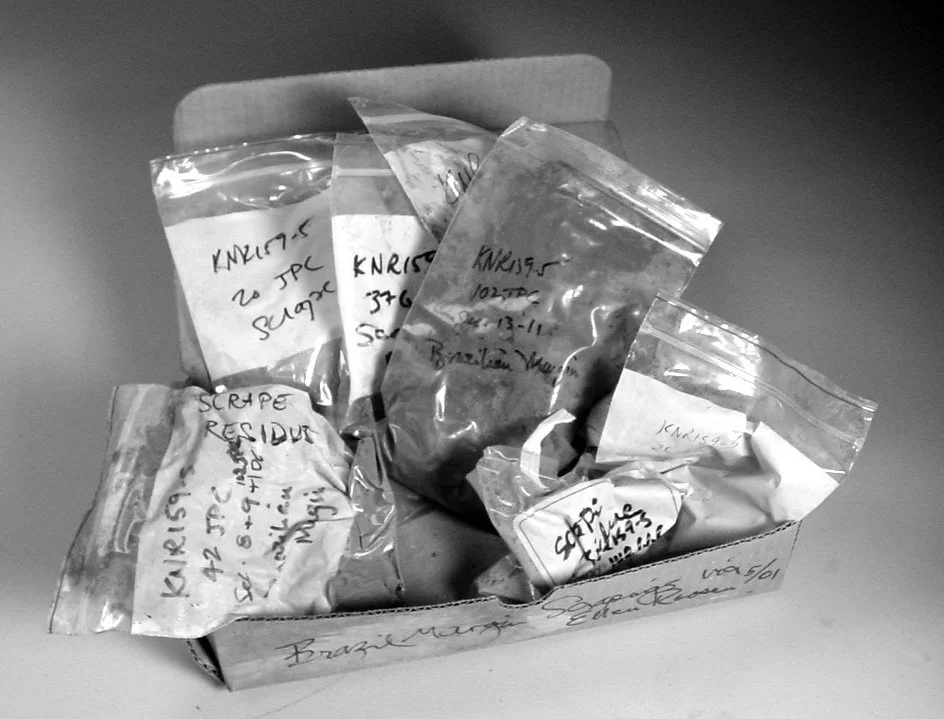
More Mud Samples Came
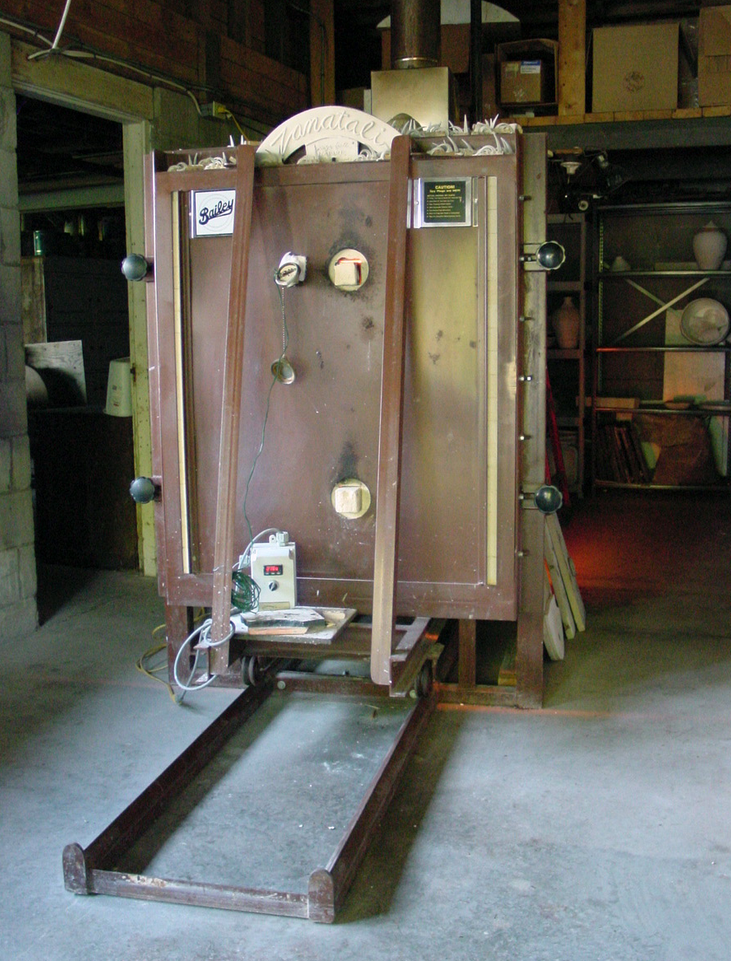
Indoor Bailey Car Kiln in Service 1997 to 2016
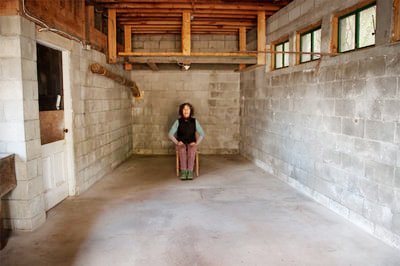
2016 Dismantled.Kiln Room, Joan with Tired Hands.
Occasional Miracles
-
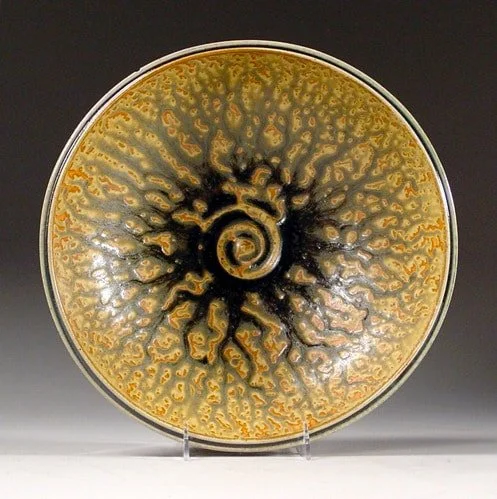
![dendritic pattern, self-organized]()
Dendritic Patterns
-
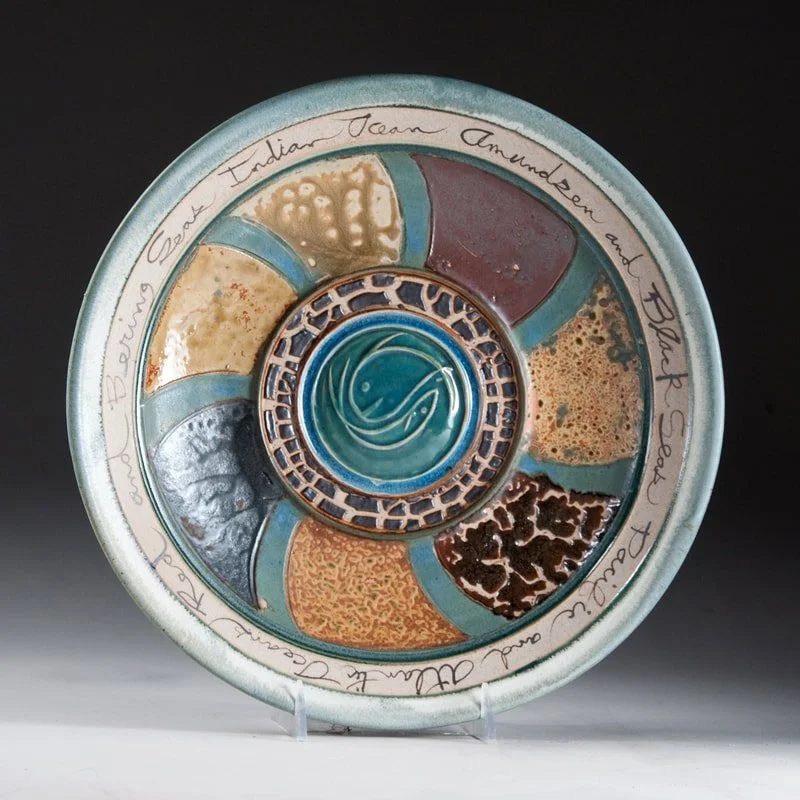
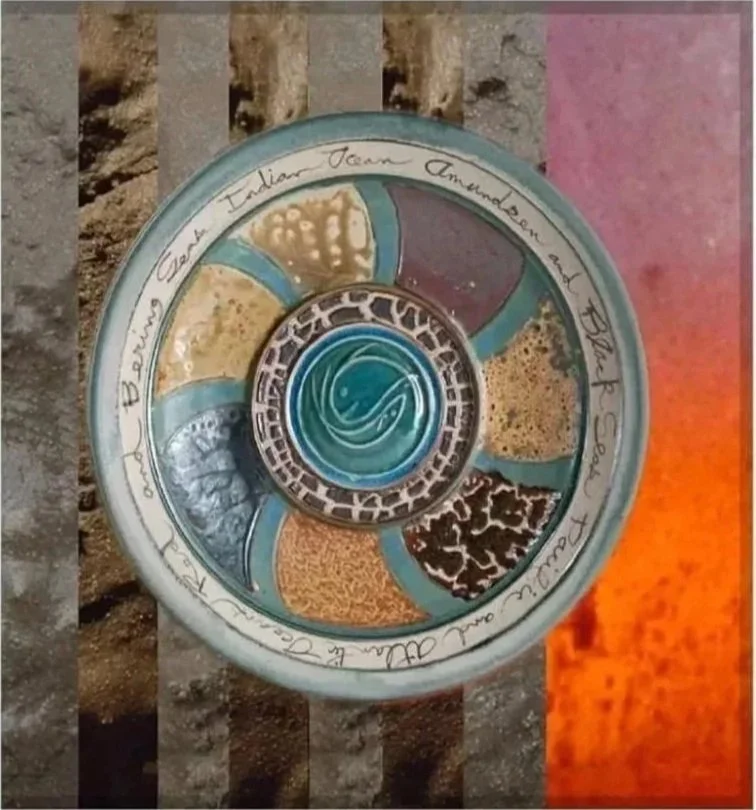
![Indian Ocean, Antarctica, Atlantic, Pacific, Red and Amundsen Seas]()
Mappable Sampler
-
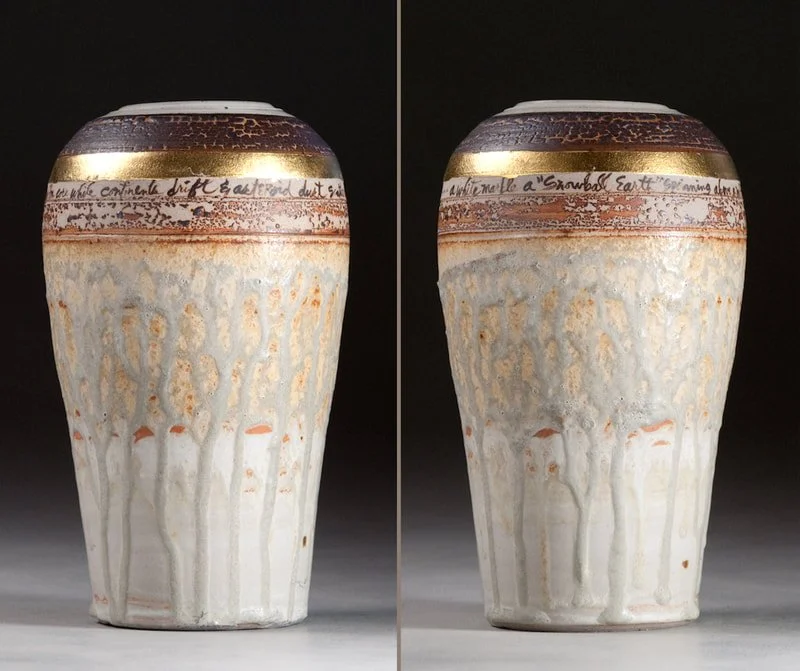
![Snowball Earth and KT Band]()
Vast Space ~ Deep Time
-
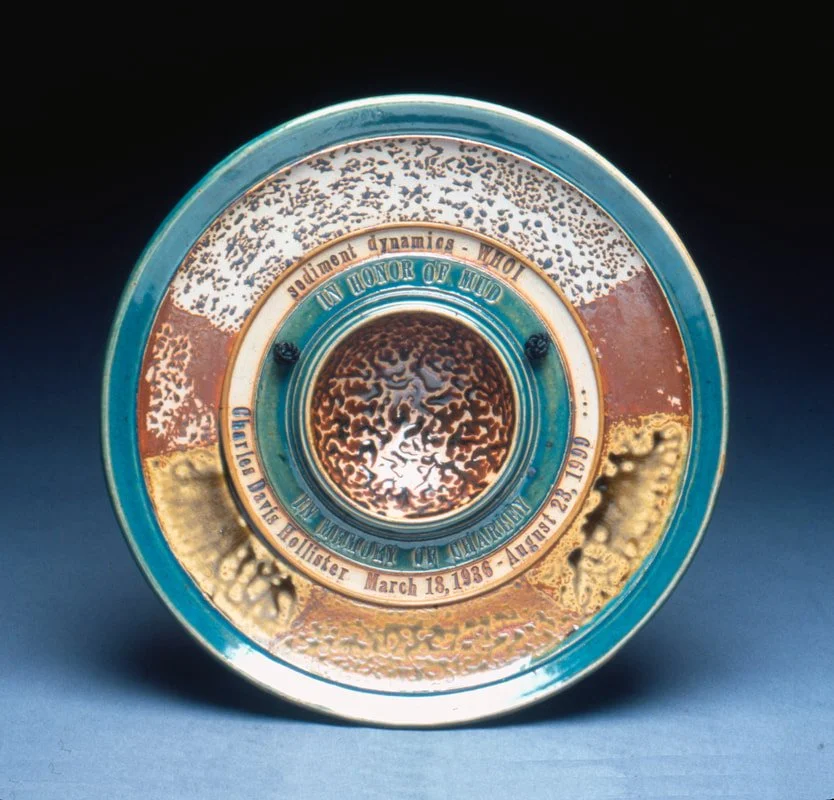
![Memorial to Charlie Hollister, Santa Barbara Basin]()
Muds Honor Man
-
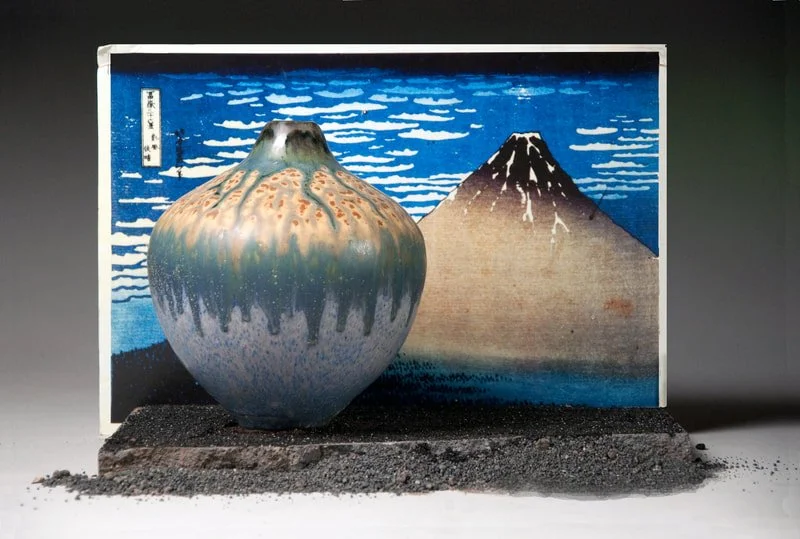
![Earth's recycling, Fuji, geophysics, Sus Honjo]()
Sediment -> Magma -> Volcanic Rock
-
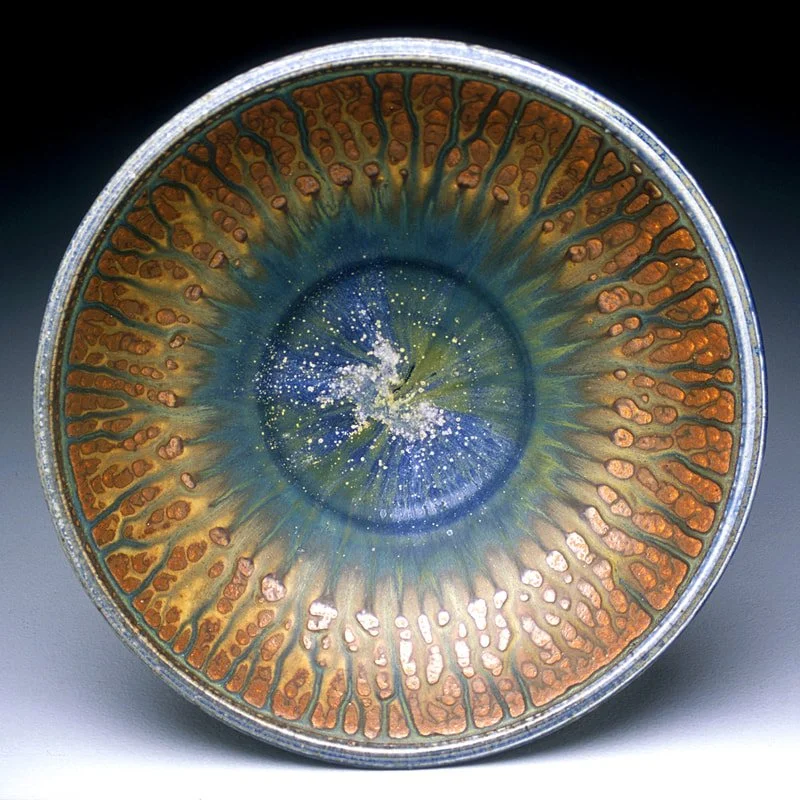
![Atlantic Ocean sediment mixed into a miracle]()
Wholke Cosmos in One Bowl
-
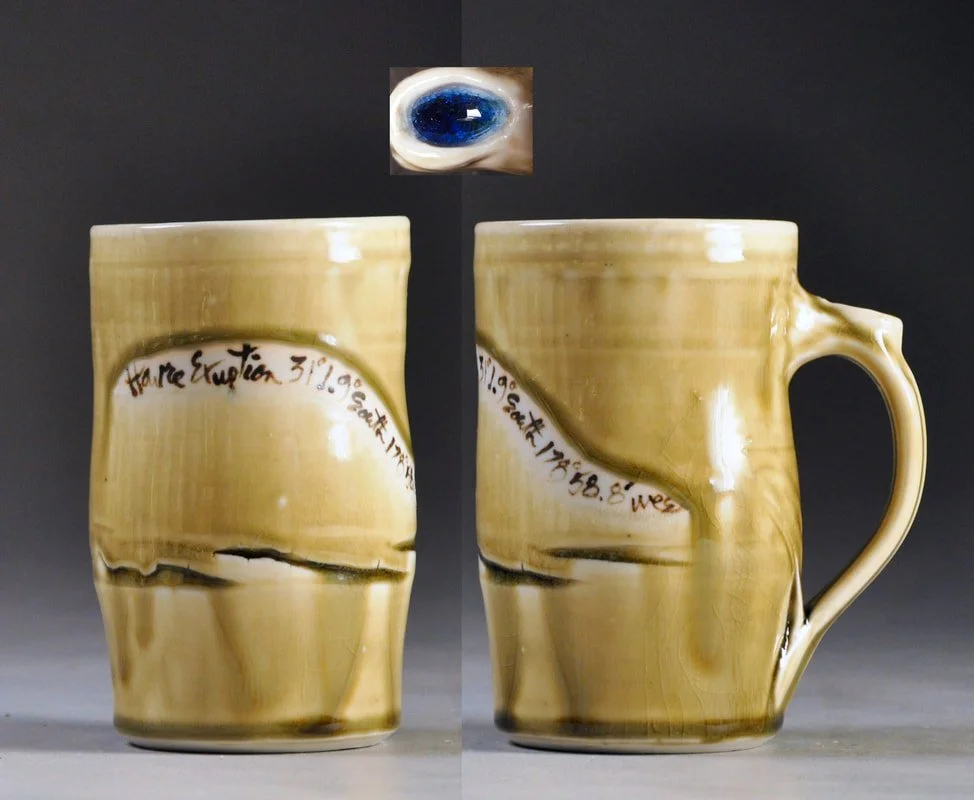
![Two sides photographed of one ceramic mug with inscriptions of handwritten text describing the volcanic eruption site at Havre that reslted in pumice-rich mud that is the silica-rich glaze on the porcelain clay. Glass above is a view of a thumbwell]()
Havre Volcanic Pumice Glaze